In this article (10)
As of 10 November 2026, no statewide rule makes you replace a wood fence. Under the Zone 0 rule the Board of Forestry adopted on 19 August 2026, which is not in effect, existing wood fences could stay and be repaired with wood; only the first 5 feet where a fence attaches to the house would have to become noncombustible, 3 to 5 years after the rule takes effect.
A few things would change that answer: tearing the fence out and rebuilding it, building new fence near the house, or living in a city with its own stricter rules. Each is covered below. The full set of fence provisions is on the Zone 0 fence requirements page.
Is any wood fence rule in force right now?
Not statewide. The Board filed the rule with the Office of Administrative Law (OAL) on 28 August 2026 (file 2026-0828-03E) and withdrew it on 8 September 2026, before OAL ruled. On 10 November 2026, OAL’s list of emergency regulations under review had no Board of Forestry entry. The rule takes effect only after OAL approves it and it is filed with the Secretary of State; our page on whether the Zone Zero law is in effect tracks that.
Two other points hold today. Selling a house does not trigger anything under state law, because the point-of-sale version depended on SB 326, vetoed on 11 October 2025 (veto sustained 2 March 2026). And in the State Responsibility Area, CAL FIRE may not change its inspections or enforcement for Zone 0 until the State Fire Marshal posts a written finding that the Legislature has funded it (Public Resources Code 4291(h), as amended by AB 1455).
Which parts of an existing wood fence would the rule reach?
It depends on where each section sits relative to the house. The rule would apply in the State Responsibility Area and in local Very High Fire Hazard Severity Zones.
| Section of your fence | Under the adopted rule (not in effect) | Rule text |
|---|---|---|
| Attached to the house, or ending within 1 ft of it | First 5 ft would have to be noncombustible | 1298.04(b)(8), (b)(9)(A); 1299.03(d)(8), (d)(9) |
| Running parallel to the house within 5 ft, not within 1 ft | May stay; no new combustible fence there | 1298.04(b)(9)(B) |
| More than 5 ft from the house | Not affected | Board staff memo, July 2026 |
The Board’s July 2026 staff memo states the intent: “the purpose of the regulations is not to require wholesale replacement of existing wood fences,” and “Fences more than five feet from the structure are not impacted by the draft regulation.” The Board’s September 2026 guidance repeats both points.
For the parallel case, the guidance, which is advice and not rule text, asks owners to “work to upgrade the fence to a noncombustible material along this section,” adding that “This does not mean replacing the entire fence, but only the section that is within five feet of the structure.” For the attached case, see wood fence attached to house.
Can I repair my wood fence in Zone 0?
Yes. The adopted text says: “Fence repairs to an existing Combustible fence may be made using Combustible replacement materials” (1298.04(b)(9)(C); the same sentence is in 1299.03(d)(9)). The staff memo says this lets owners avoid “unnecessary replacement costs.”
There is one limit. In our reading, a wood repair inside the attached 5 feet would still have to come out by your deadline, because the span requirement in (b)(9)(A) would apply regardless. You could patch a broken picket at the house end with wood, but that bay would need replacing later anyway. If the house end is due for work, a metal panel or gate there solves both problems; see metal gate on a wood fence for the setups that clear the span.
When does a repair become a replacement?
The rule does not define the line. The Board’s guidance says Zone 0 standards apply “only where an attaching combustible gate exists, or a fence is fully replaced,” and then only within Zone 0. The July 2026 staff memo uses nearly the same words.
So a full tear-out and rebuild counts. In that case the new section within 5 feet of the house cannot be combustible, because the rule bars new combustible fences or gates within 5 feet after the effective date (1298.04(b)(9)(B)). The wood beyond 5 feet can be rebuilt in wood.
What about swapping three of ten bays, or resetting rotten posts along the whole run? The rule and guidance do not say. Ask your local fire agency before you start. Our own suggestion, not a rule requirement, is to keep dated photos and receipts of the work.
When would the attached section have to be done?
Nothing is due until the rule takes effect. From that date:
| Home | Deadline for the attached 5 ft | Rule section |
|---|---|---|
| New home (permit filed after the effective date) | Immediately | 1298.04(c)(1); 1299.03(e)(1) |
| Existing home, local Very High zone | 3 years, or up to 5 years on the local fire agency’s timeline | 1298.04(c)(4) |
| Existing home, State Responsibility Area | 5 years, or a CAL FIRE Director timeline of at least 3 years | 1299.03(e)(4) |
The Board’s guidance says the gate or panel is due “within five years of the Zone 0 regulation adoption.” Where it differs from the rule text, the rule text governs.
How do San Diego and other local rules differ?
Local agencies can be stricter. AB 1455 (Government Code 51182(f)) lets them adopt defensible space rules that are “more stringent” than the Board’s.
San Diego already has. Its Fire-Rescue Zone 0 Guidelines (Rev. 4/22/2026) apply in the city’s Very High zones, become enforceable for existing homes on 28 February 2027, and ask owners to “attempt to achieve full compliance” by 28 February 2029, including “replacing fences and gates that do not comply.” Under an approved compliance plan, “all existing fences and gates within 5 feet of the structure must be made of non-combustible material,” with narrow exceptions for existing vinyl and new listed fire-retardant-treated wood running parallel at least 4 feet from the house. That can reach existing parallel wood fences the state text leaves alone, though the guidelines also say existing wood fencing “may be permitted where it does not create a continuous fuel pathway,” as the fire code official decides. Details are on our San Diego fence rules page.
Insurers can also ask for more. The IBHS Wildfire Prepared Home 2026 checklist says to “Replace wood or vinyl fencing within 5 feet of the home with noncombustible fencing (e.g. metal).” The California FAIR Plan offers a discount where the property has “only noncombustible materials incorporated into any improvements to the property, including fences and gates, within 5 feet of the dwelling.”
What should I do with my wood fence now?
Start with a tape measure. Mark 5 feet out from the wall, or from an attached deck or stairs, which count as part of the structure (1298.02(h)), and note which posts, panels and gates fall inside. That tells you how much fence the rule would reach.
In the meantime, UC ANR’s Fire Network advises clearing “vegetation (grass, shrubs, lower tree branches) and combustible materials in contact with the fence.” NIST’s fence experiments found that combustible fences “can be rapid conduits for fire and can potentially spread fire to attached or adjacent structures,” and rated combustible fences with mulch at the base as high hazard. Clearing mulch, leaves and plants from the base of the fence costs nothing.
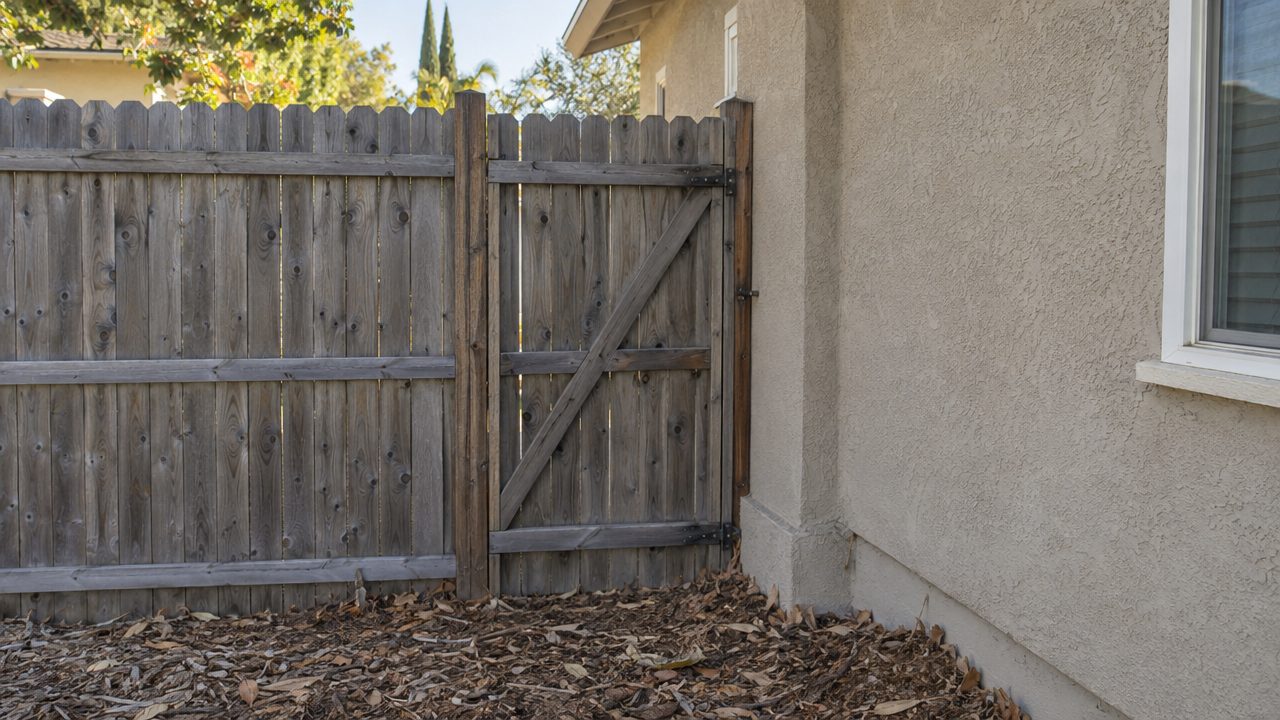 Before: wood at the wall
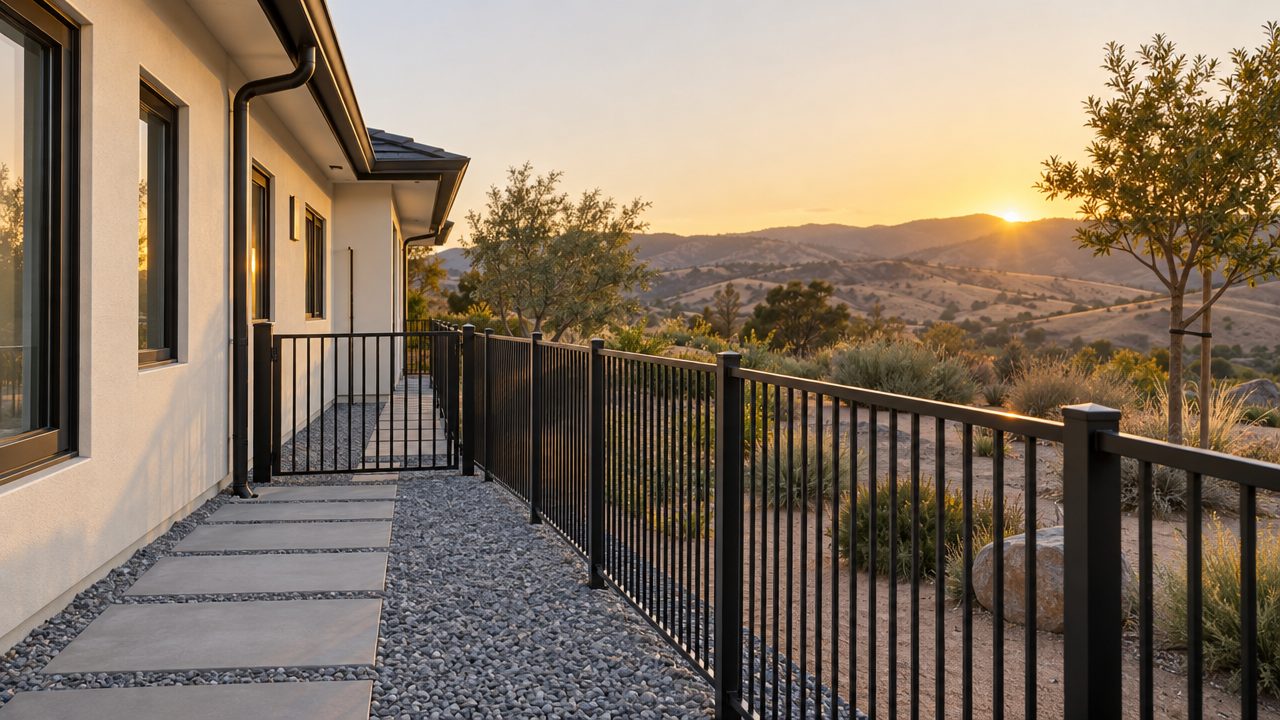
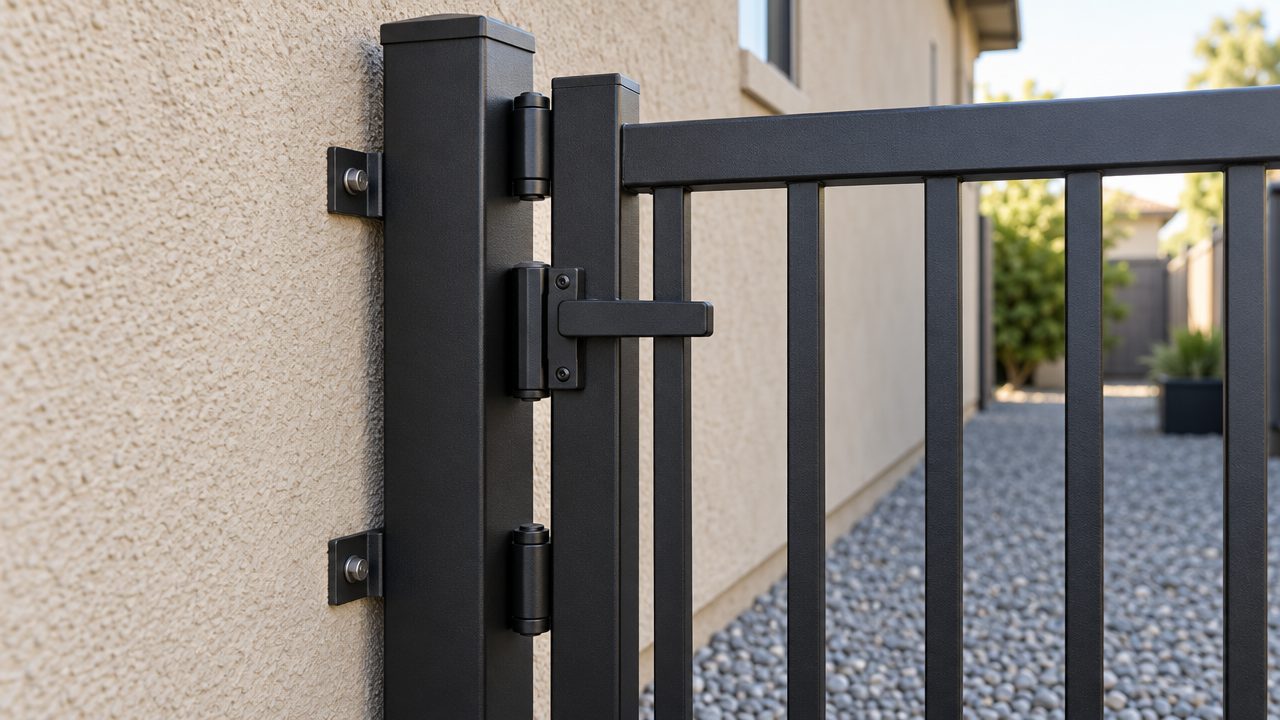 After: metal for the first 5 ft
Questions people ask
Are wood fences a fire hazard?
They can carry fire to a house. NIST's 2022 fence experiments found that combustible fences 'can be rapid conduits for fire and can potentially spread fire to attached or adjacent structures,' with mulch at the base raising the hazard. That is why the Board of Forestry's adopted Zone 0 rule targets the section of fence that touches the house.
What is the Zone Zero deadline for existing homes?
There is none yet, because the rule is not in effect as of 10 November 2026. Once it is, existing homes would get 3 years in local Very High zones, or up to 5 on the local fire agency's timeline (14 CCR 1298.04(c)(4)), and 5 years in the State Responsibility Area, or no less than 3 on CAL FIRE's timeline (14 CCR 1299.03(e)(4)), to fix an attached fence.
Does Zone Zero apply when selling a house?
Not under state law. The point-of-sale version depended on SB 326, which was vetoed on 11 October 2025; the veto was sustained on 2 March 2026. Selling a house does not trigger a state Zone 0 fence requirement.
Keep reading
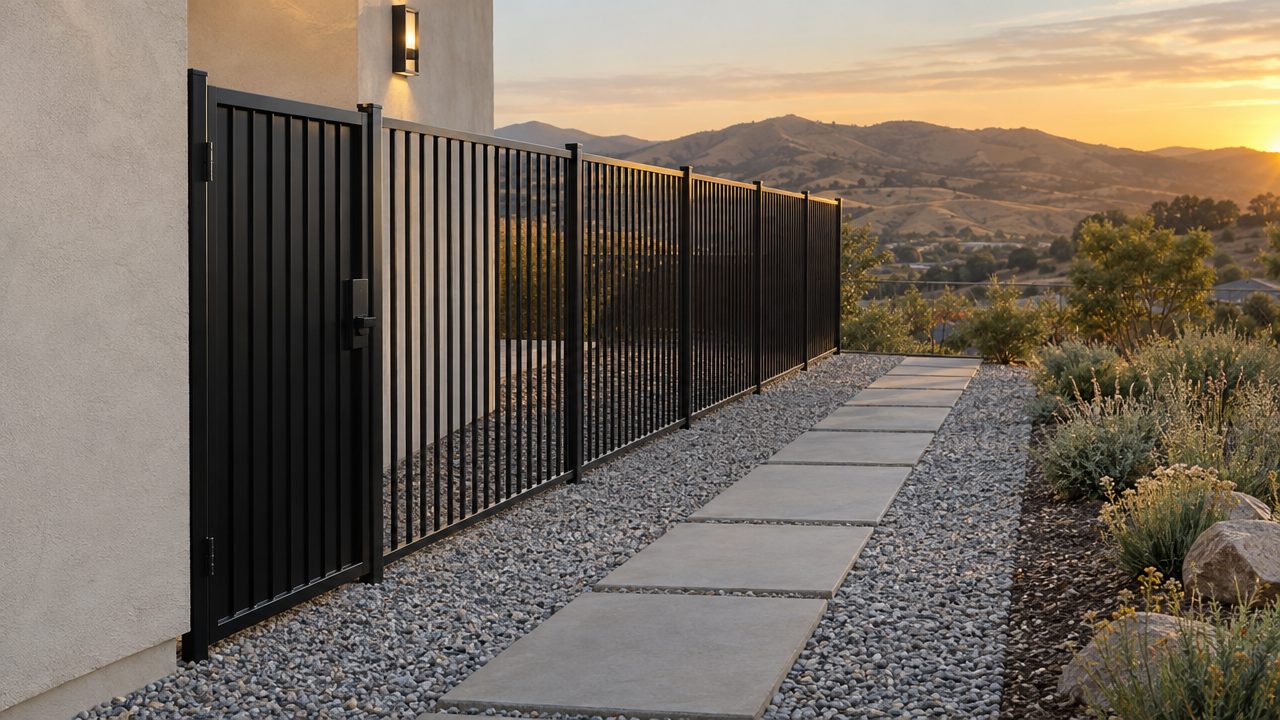 GuideZone 0 fence requirements in California
- Wood fence attached to house: what Zone 0 would require
- Metal gate on a wood fence: does it meet Zone 0?
 Zone Zero fencing in San Diego: the city's fence rules
 Is Zone Zero a law in California? Status on Nov 10, 2026
More in Fences and gates
Sources
- Board of Forestry, Zone 0 regulation summary and rule text as approved (14 CCR 1298 et seq., 1299 et seq.), .
- Board of Forestry staff clarification memo on Zone 0 (July 23, 2026 workshop), .
- Board of Forestry, Zone Zero Guidance Document (dated September 2026, adopted 19 August 2026), .
- OAL, Recent Actions Taken on Emergency Regulations (file 2026-0828-03E, withdrawn 8 September 2026), .
- OAL, Emergency Regulations Under Review (no Board of Forestry entry when checked), .
- AB 1455 (Bryan), Chapter 731, Statutes of 2025 (Government Code 51182(f); Public Resources Code 4291(h)), .
- SB 326 (Becker), bill history including veto, .
- City of San Diego Fire-Rescue, Zone 0 Guidelines for Existing Structures (Rev. 4/22/2026), .
- IBHS Wildfire Prepared Home 2026 abbreviated checklist, .
- California FAIR Plan, discounts for Dwelling Fire and Commercial policies, .
- NIST Technical Note 2228-upd1, Wind-Driven Fire Spread to a Structure from Fences and Mulch (Butler, Johnsson and others), .
- UC ANR Fire Network, Fence (undated, accessed), .
Spot an error? Tell us and we will correct it and note the change.