In this article (11)
This page covers the attachment point only. For every fence provision in the rule, see the Zone 0 fence requirements guide.
Is a wood fence attached to the house allowed under Zone 0 right now?
Yes, under state law. The Board filed the rule with the Office of Administrative Law (OAL) on 28 August 2026 (file 2026-0828-03E) and withdrew it on 8 September 2026, before OAL ruled. On 10 November 2026 OAL’s list of emergency regulations under review had no Board of Forestry entry. The rule takes effect only after OAL approves it and it is filed with the Secretary of State. Our page on whether the Zone Zero law is in effect tracks that.
A city or county can be ahead of the state. San Diego’s Zone 0 Guidelines (Rev. 4/22/2026) have applied to new structures in its Very High Fire Hazard Severity Zones since 28 February 2026, start applying to existing structures on 28 February 2027, and set a target of full compliance for existing homes, including “replacing fences and gates that do not comply,” by 28 February 2029.
What would the rule require where the fence meets the house?
Two provisions in the adopted text apply to an attached fence. They read almost the same in 14 CCR 1298.04 (local Very High zones) and 1299.03 (State Responsibility Area):
- “Combustible fences and gates shall not be attached to an Occupied Structure.” (1298.04(b)(8); 1299.03(d)(8) says “Building or Structure”.)
- “All fences and gates that are attached to an Occupied Structure, or come within one (1) foot of contact with an Occupied Structure, shall have a five (5) foot Noncombustible span from the point of attachment or the point closest to the Occupied Structure.” (1298.04(b)(9)(A); 1299.03(d)(9).)
The rule defines combustible as “Vegetative, wood, or other materials that are likely to ignite and transmit flames in a wildfire” (1298.02(a)). Wood is named outright, so a wood post, rail or picket inside those 5 feet would not meet the span. The Board’s September 2026 guidance puts it in one line: “Replace the first 5 feet of attached fences with metal or non-combustible materials.”
What counts as attached?
Three situations would trigger the span:
- The fence is fastened to the wall. A post bolted to stucco or a rail screwed into trim.
- The fence stops within 1 foot. A fence that “come[s] within one (1) foot of contact” is covered, and the 5 feet is measured from its closest point. Leaving a few inches of air between the last post and the siding does not get around it.
- The fence meets a deck, stair or pergola. The rule counts an attached deck, stairs or pergola as part of the structure, including self-supporting ones within 1 foot of the house (1298.02(h)). So a fence that ties into your deck counts as attached.
Why does the rule single out the attachment point?
Because a burning fence can carry fire to the wall. NIST ran 187 field experiments with wood, vinyl and wood-plastic composite fences and reported in 2022 that “combustible fences can be rapid conduits for fire and can potentially spread fire to attached or adjacent structures.” It rated combustible fences with mulch at the base as high hazard and wood fences without mulch as medium hazard, with slow spread dominated by glowing combustion. Firebrands from burning fences and mulch started spot fires more than 47 m (155 ft) downwind.
IBHS describes a case where “a combustible section of fence attached to the home was exposed to flame and could have spread fire directly to the home.” Its Wildfire Prepared Home program requires noncombustible fencing within 5 feet of the home, “including where fences attach to the home.”
The Board’s guidance calls attached fences a fuel ladder to the structure and says that upgrading the 5 feet that touches the house “will break the wick of fire, should the fence ignite in the future.”
Do I have to tear out the whole wood fence?
No. The Board’s July 2026 staff memo says the purpose “is not to require wholesale replacement of existing wood fences,” and that “Fences more than five feet from the structure are not impacted by the draft regulation.” The adopted rule also allows repairs: “Fence repairs to an existing Combustible fence may be made using Combustible replacement materials” (1298.04(b)(9)(C)). More detail on repairs and what stays: do you have to replace your wood fence for Zone 0.
There are two limits. In our reading, a wood repair inside the attached 5 feet would still have to be replaced with noncombustible material by your deadline, because the span requirement in (b)(9)(A) still applies. And the Board’s guidance says that where “a fence is fully replaced,” the Zone 0 standards apply within 5 feet of the house, where the rule bars new combustible fences after the effective date (1298.04(b)(9)(B)).
What are the options for converting the house end?
Four approaches fit the rule’s wording. The rule does not prescribe a method, so confirm the plan with your local fire agency.
- Metal gate at the wall. If the fence already ends in a side gate, swap it. The Board’s rule summary gives “replacing a wooden gate with a non-combustible metal gate” as its example. If the gate is narrower than 5 feet, the post and fence between the gate and the 5 foot mark also need to be noncombustible. Gate specifics are on our Zone 0 gate requirements page.
- Metal panel in place of the first bay. Fire Safe Marin notes that wood plank fences hang between installed posts, so “it is necessary to measure the distance between the already installed supports,” and that metal fencing is “often sold in standard sections.” A steel or aluminum panel on metal posts replaces the wood out to at least 5 feet.
- Masonry or fiber cement. UC ANR gives steel and concrete as examples of noncombustible fence materials, and Fire Safe Marin lists fiber cement among the strongest options. For any material, the test the rule uses is ASTM E136; see what counts as noncombustible.
- Cut the fence back. Removing the house-end section so the fence ends more than 1 foot from the house takes it out of paragraph (b)(9)(A), in our reading. You lose the enclosure, and the gap could not later be filled with wood. San Diego’s local rules and the IBHS program are stricter about wood left within 5 feet. In Marin, the Sleepy Hollow Fire Protection District’s 2026 program removes “the portion of a wooden fence connected to a structure” at no cost.
What does it cost?
One San Diego County contractor, JJ’s Fence Company, publishes $2,000 to $2,500 for a 5 to 10 foot aluminum Zone 0 section without a gate, and from $3,000 with a gate (undated page, checked 10 November 2026). That is one firm’s pricing. Our side gate replacement cost page covers gate pricing in more detail.
The California FAIR Plan already lists, among its wildfire discounts, a property with “only noncombustible materials incorporated into any improvements to the property, including fences and gates, within 5 feet of the dwelling.”
When would the attached section have to comply?
Nothing is due until the rule takes effect. From that date:
| Home | Deadline for the attached 5 feet | Rule section |
|---|---|---|
| New home (permit filed after the effective date) | Immediately | 1298.04(c)(1); 1299.03(e)(1) |
| Existing home, local Very High zone | 3 years, or up to 5 years on the local fire agency’s timeline | 1298.04(c)(4) |
| Existing home, State Responsibility Area | 5 years, or a CAL FIRE Director timeline of at least 3 years | 1299.03(e)(4) |
The Board’s guidance says a noncombustible gate or panel is due “within five years of the Zone 0 regulation adoption.” Where it differs from the rule text, the rule text governs.
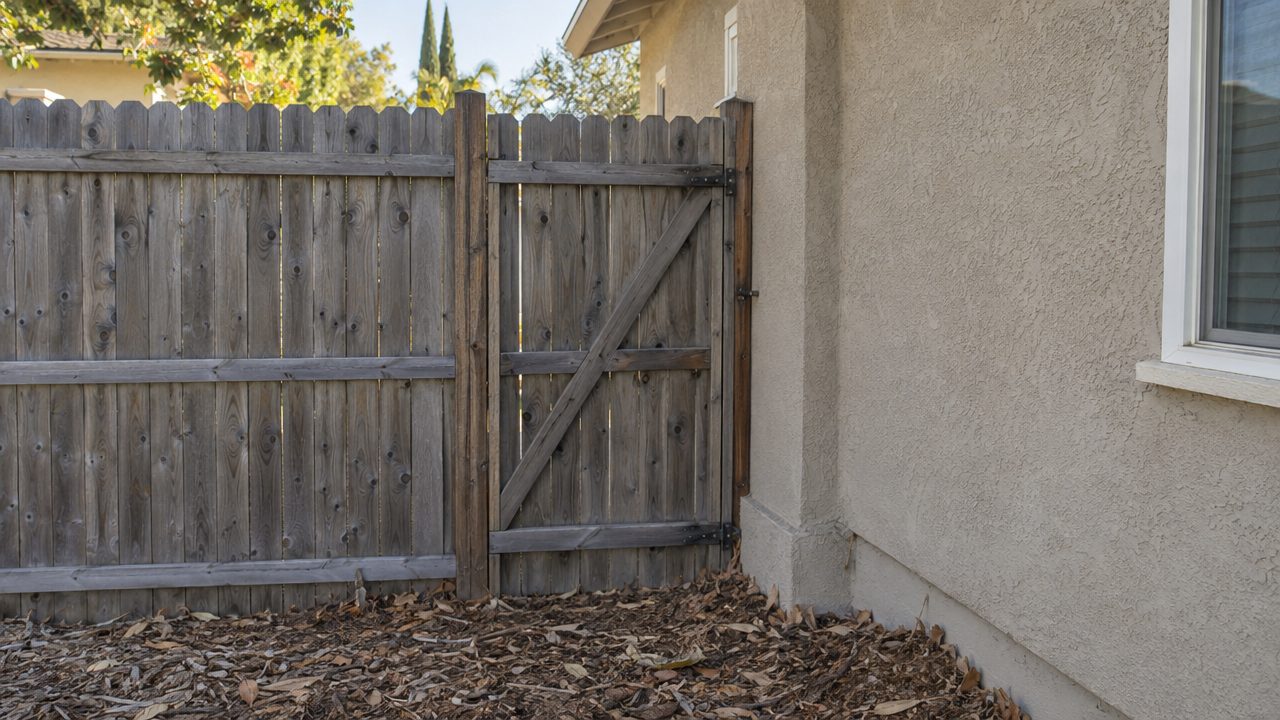 Before: wood at the wall
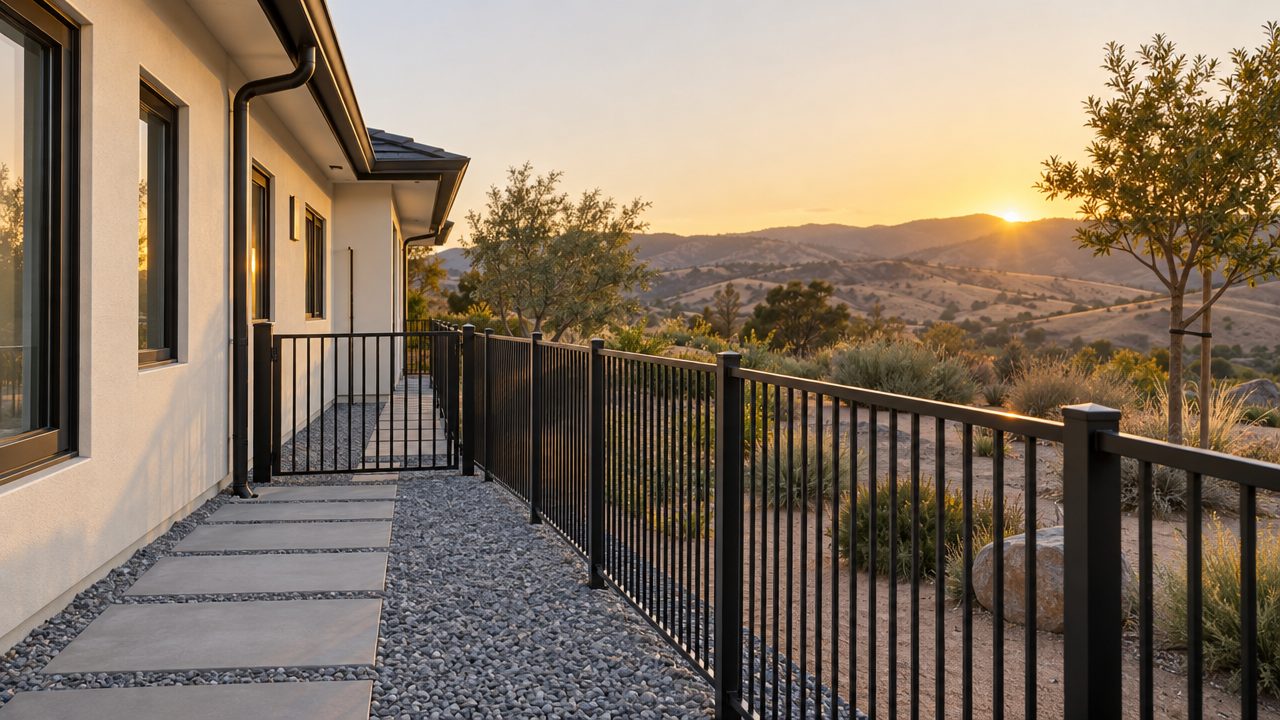
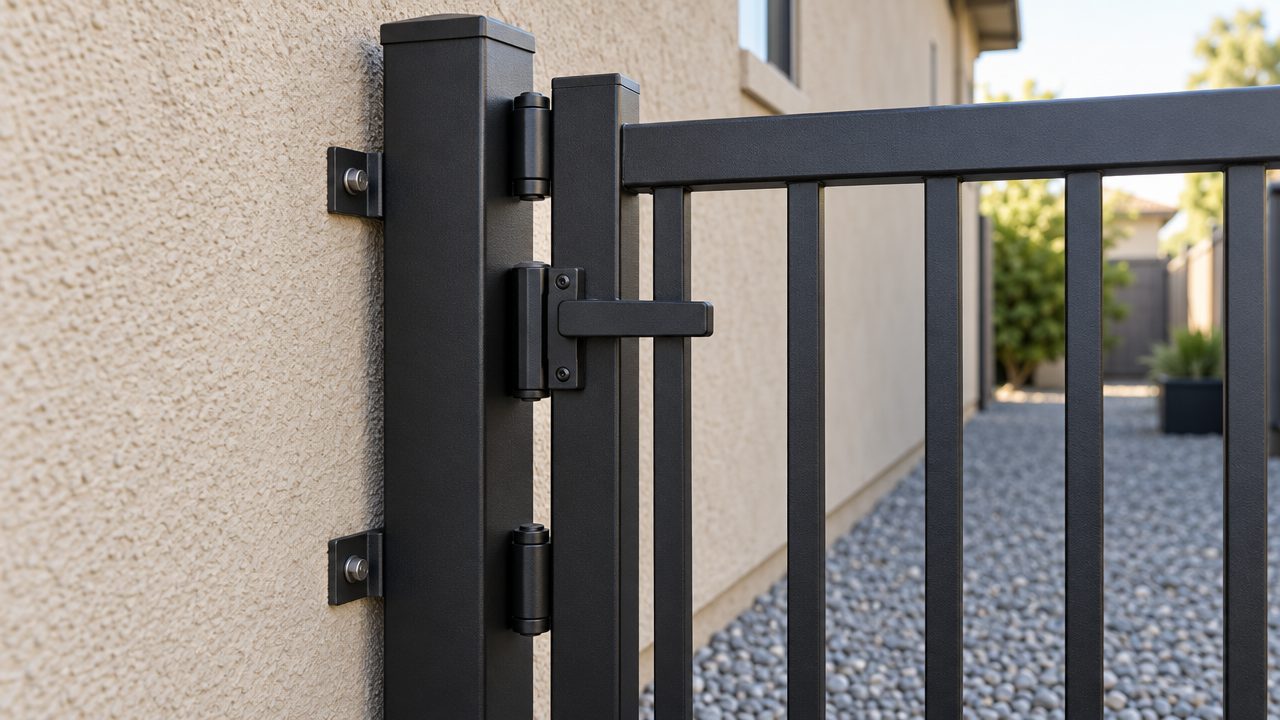 After: metal for the first 5 ft
Questions people ask
Can I repair my wood fence in Zone 0?
Yes. The adopted rule says repairs to an existing combustible fence may be made with combustible replacement materials (14 CCR 1298.04(b)(9)(C) and 1299.03(d)(9)). A wood patch in the attached 5 feet would still have to be replaced with noncombustible material by the compliance deadline once the rule is in effect.
Does a gap between the fence and the house take it out of the rule?
Only if the gap is more than 1 foot. The adopted rule covers fences that are attached or that 'come within one (1) foot of contact' with the house, and measures the 5 foot span from the closest point. A fence ending 6 inches from the siding is treated like an attached fence.
Keep reading
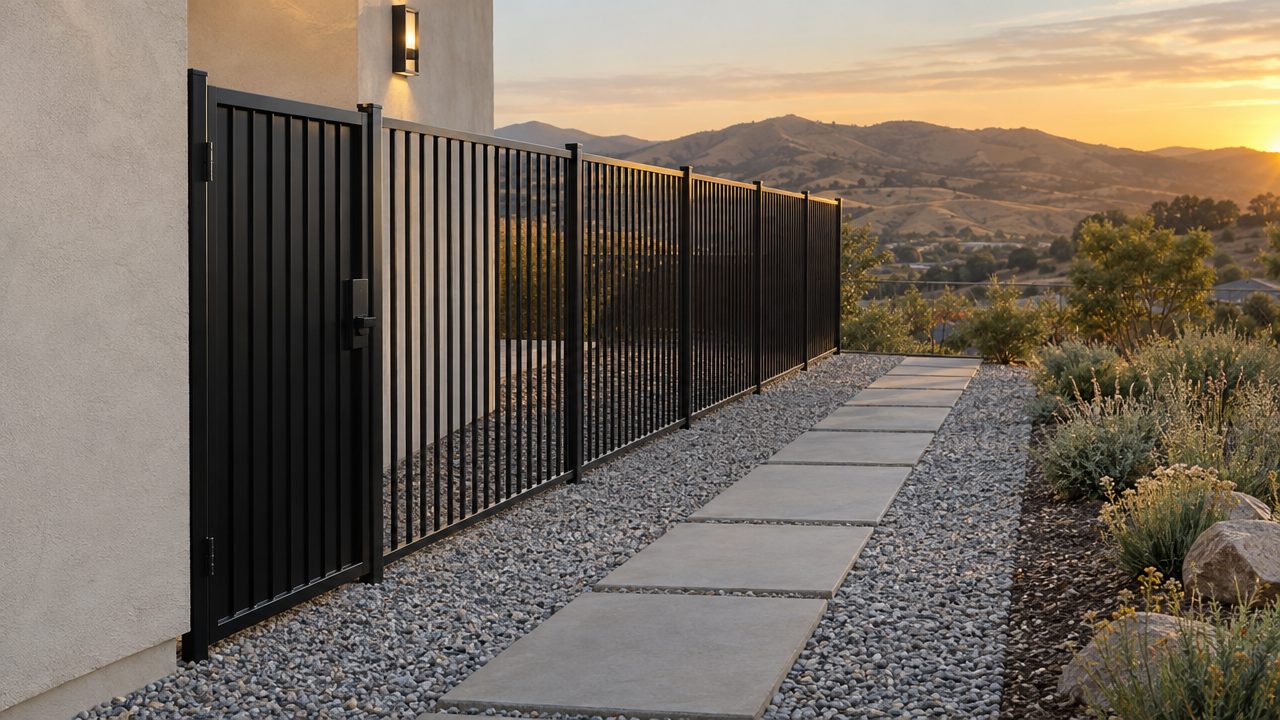 GuideZone 0 fence requirements in California
- Zone zero gates: what California's rule would require
 How much to replace a side gate: wood vs metal prices
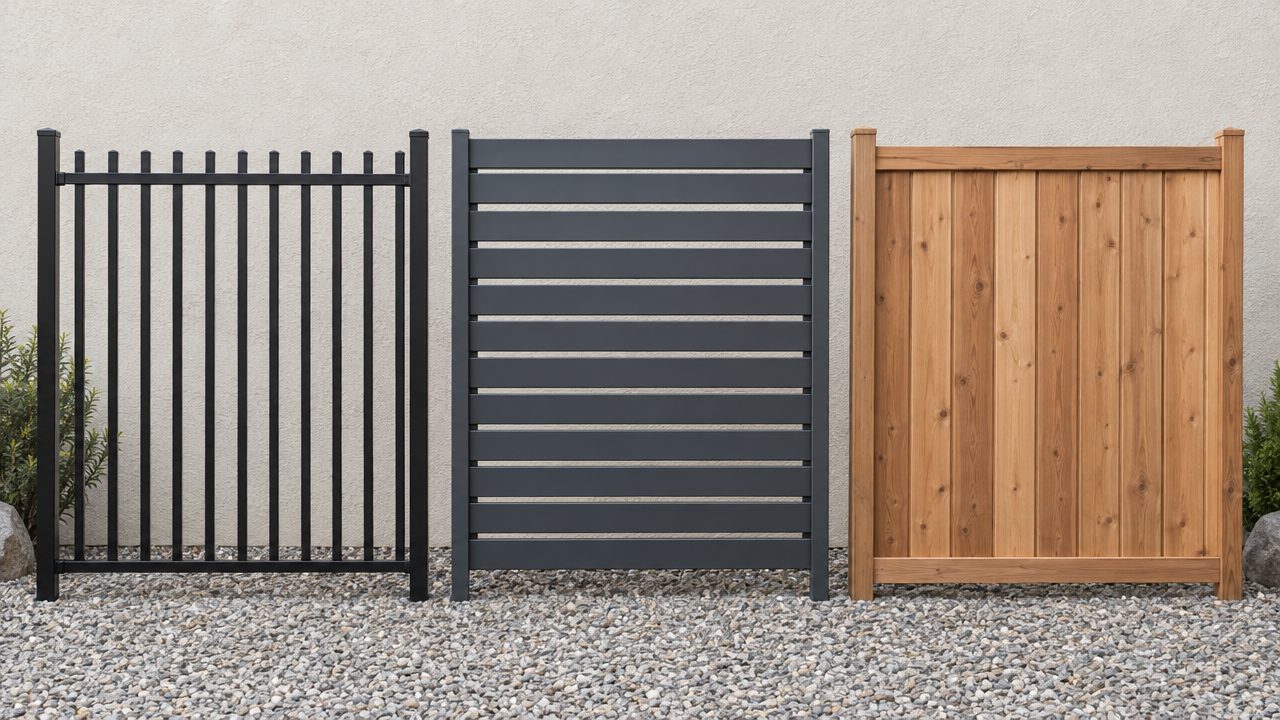 GuideWhat is noncombustible material? The Zone 0 definition
 Is Zone Zero a law in California? Status on Nov 10, 2026
More in Fences and gates
Sources
- Board of Forestry, Zone 0 regulation summary and rule text as approved (14 CCR 1298 et seq., 1299 et seq.), .
- Board of Forestry, Zone Zero Guidance Document (dated September 2026, adopted 19 August 2026), .
- Board of Forestry staff clarification memo on Zone 0 (July 23, 2026 workshop), .
- OAL, Recent Actions Taken on Emergency Regulations (file 2026-0828-03E, withdrawn 8 September 2026), .
- OAL, Emergency Regulations Under Review (no Board of Forestry entry when checked), .
- NIST Technical Note 2228-upd1, Wind-Driven Fire Spread to a Structure from Fences and Mulch (Butler, Johnsson and others), .
- IBHS Wildfire Prepared Home, Research (combustible fencing touching home; undated, accessed), .
- UC ANR Fire Network, Fence (undated, accessed), .
- Fire Safe Marin, Fences (undated, accessed), .
- Sleepy Hollow Fire Protection District, 2026 Zone Zero program, .
- City of San Diego Fire-Rescue, Zone 0 Guidelines for Existing Structures (Rev. 4/22/2026), .
- JJ's Fence Company, partial fence replacement for Zone 0 (San Diego County pricing, undated; accessed), .
- California FAIR Plan, discounts for Dwelling Fire and Commercial policies, .
Spot an error? Tell us and we will correct it and note the change.