In this article (12)
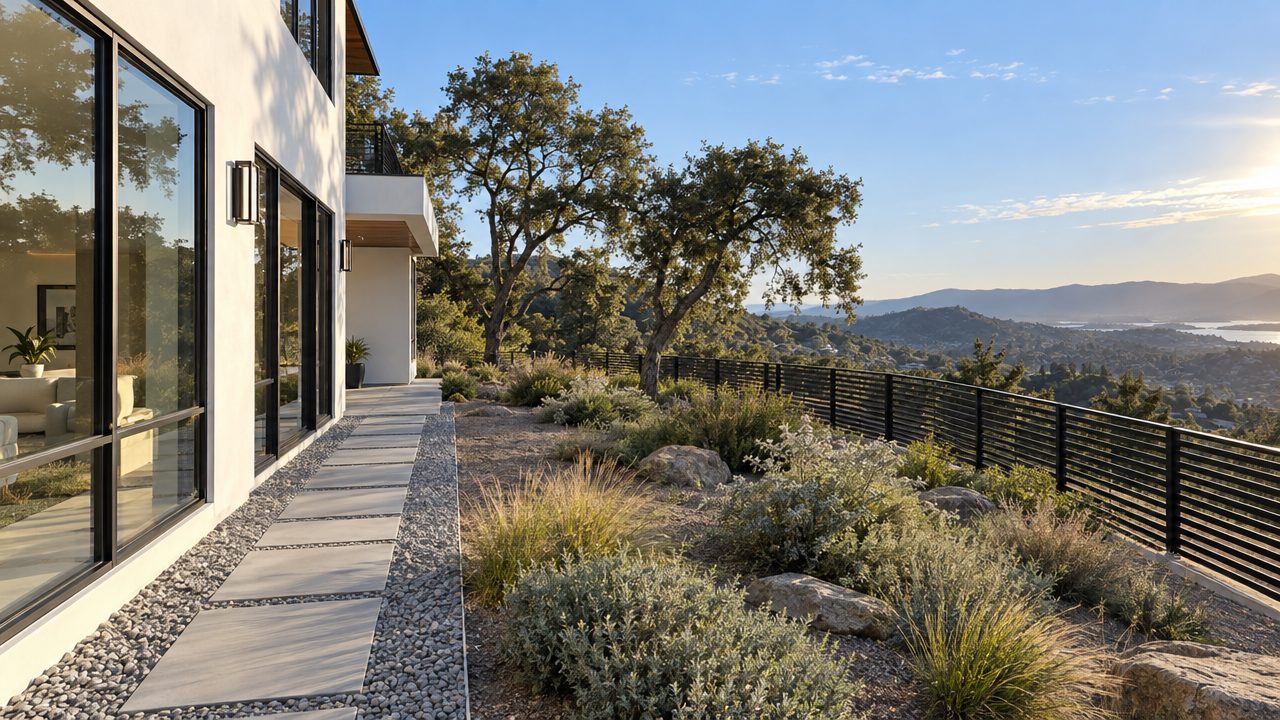
A Zone 0 checklist covers the first 5 feet around a California home: no combustible mulch, debris or firewood, clean roof and gutters, trimmed trees, a plant-free strip at the walls, no combustible fence or gate attached to the house, and no combustible shed. As of 10 November 2026 the rule behind it (14 CCR 1298.04 and 1299.03) was adopted on 19 August 2026 but was not in effect.
Below, each item in the adopted rule text is a printable checkbox with its section number and the deadline an existing home would face. For the reasons behind each item and how to do the work, see how to comply with Zone Zero.
Is the Zone 0 checklist required yet?
No. The Board of Forestry adopted the regulation 8-0 on 19 August 2026, filed it with the Office of Administrative Law (OAL) on 28 August 2026 as file 2026-0828-03E, and withdrew it on 8 September 2026 before OAL ruled. On 10 November 2026, OAL’s list of emergency regulations under review showed no Board of Forestry entry. The full status is in is Zone Zero a law in effect.
Every deadline below counts from the effective date, which is the day the rule is filed with the Secretary of State after OAL approval. A new home (building permit application submitted after that date) would have to meet the whole list on day one (1298.04(c)(1); 1299.03(e)(1)).
Does the checklist apply to my home?
The state rule covers buildings in the State Responsibility Area (SRA, 14 CCR 1299.03) and occupied structures in Local Responsibility Area Very High Fire Hazard Severity Zones (LRA, 14 CCR 1298.04). References below give the LRA paragraph first, then the SRA one. Cities can be stricter under AB 1455 (2025); San Diego’s own guidelines (Rev. 4/22/2026) target full compliance for existing homes, fences and gates included, by 28 February 2029.
How do you mark out the zone?
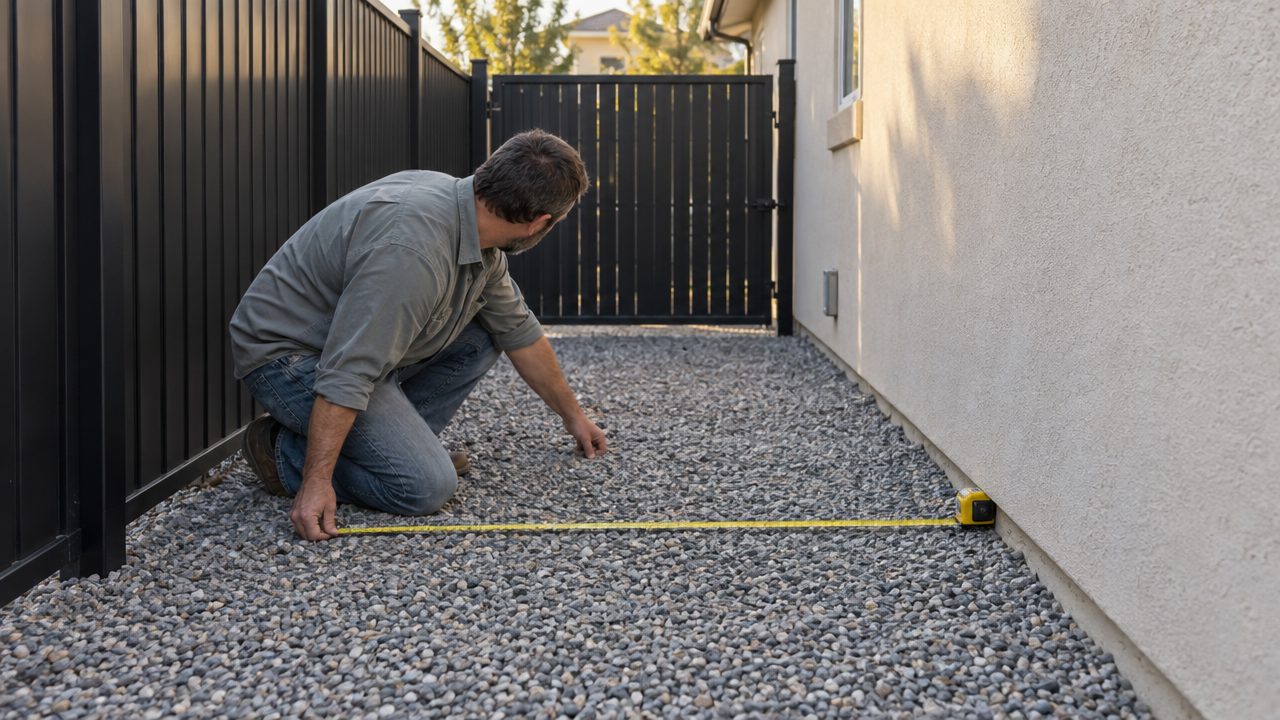
- Measure 5 feet out from the exterior walls, the roof edge, and any attached deck, stairs or pergola, stopping at your property line (1298.04(a); 1299.03(a)).
- Count a deck, stair or pergola on its own posts within 1 foot of the house as attached, and measure from its outer edge (1298.02(h); 1299.02(a)).
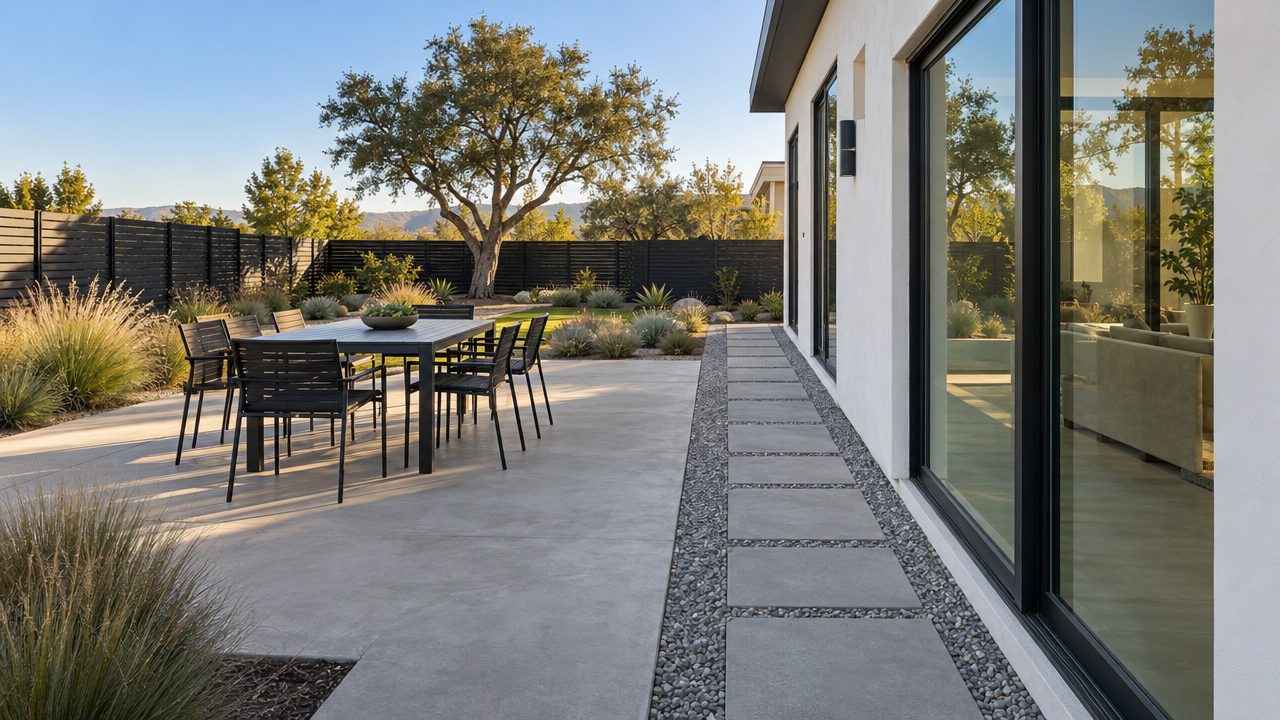
- Do not measure from a noncombustible patio. It does not extend the zone (1298.02(h); 1299.02(a)).
Which items apply on the effective date?
Existing homes would meet these on the effective date (1298.04(c)(2); 1299.03(e)(2)). The Board’s guidance (19 August 2026) marks four of these five as already required under state law: roof and gutter debris, dead branches, chimney clearance and exposed firewood.
- Roof and rain gutters clear of leaves, needles and other combustible debris. (b)(2) / (d)(2)
- No dead or dying branches on trees in the zone. (b)(5)(A) / (d)(5)(A)
- Live branches at least 10 feet from chimneys and stovepipe outlets. (b)(5)(B) / (d)(5)(B)
- No live branches under the eaves. (b)(5)(C) / (d)(5)(C)
- Exposed woodpile moved or fully covered in fire-resistant material. The Zone 0 firewood ban is a 3-year item, but the Board’s guidance says existing regulations “still require the immediate removal of exposed firewood piles.”
Which items are due within 3 years?
Existing homes get 3 years from the effective date for this group in both the LRA and the SRA (1298.04(c)(3); 1299.03(e)(3)).
- No combustible material anywhere in the 5 feet: fallen leaves and needles, bark, wood chips and other combustible mulch, and debris. (b)(1) / (d)(1)
- Nothing growing or stored under decks, balconies, pergolas and stairs. (b)(3) / (d)(3)
- No firewood stored in Zone 0. (b)(4) / (d)(4)
- Ladder fuels removed: branches in the lowest 6 feet of each tree, or the lowest third of its height if that is less, and fuels within 5 feet above the roof that create a high risk of fire transmission. (b)(5)(D) / (d)(5)(D)
- Live branches at least 5 feet above the roof and at least 1 foot from the walls. (b)(5)(E) / (d)(5)(E). The LRA text applies the wall clearance only where there is no eave.
Inspectors may allow temporary mulch for erosion control during construction or emergencies ((b)(1)(A)).
Which items are due in 3 to 5 years?
This is the last group, and it holds the plant limits, the fences and the sheds. In the LRA it is due in 3 years, or up to 5 on a timeline set by the local fire agency (1298.04(c)(4)). In the SRA it is due in 5 years, or on a CAL FIRE Director timeline of not less than 3 years (1299.03(e)(4)).
Plant-free buffers ((b)(6) / (d)(6)):
- No plants under the eaves, or within 1 foot of the wall where there is no eave. The strip runs from the wall out at least 1 foot or to the eave edge, up to 5 feet.
- No plants within 2 feet of windows, doors and vents (the LRA text adds posts).
- No plants within 5 feet of an attached deck, stairs or pergola.
What can grow in the rest of the zone ((b)(7) / (d)(7)):
- Only well-maintained non-woody plants under 3 inches tall, such as lawn or ground cover; or
- Non-woody plants 3 to 18 inches tall in clumps no bigger than 1 square foot, spaced 1.5 times the height of the tallest plant; or
- Non-woody plants up to 18 inches tall in loose noncombustible pots of 5 gallons or less, with the same spacing.
Fences and gates ((b)(8)-(9) / (d)(8)-(9)):
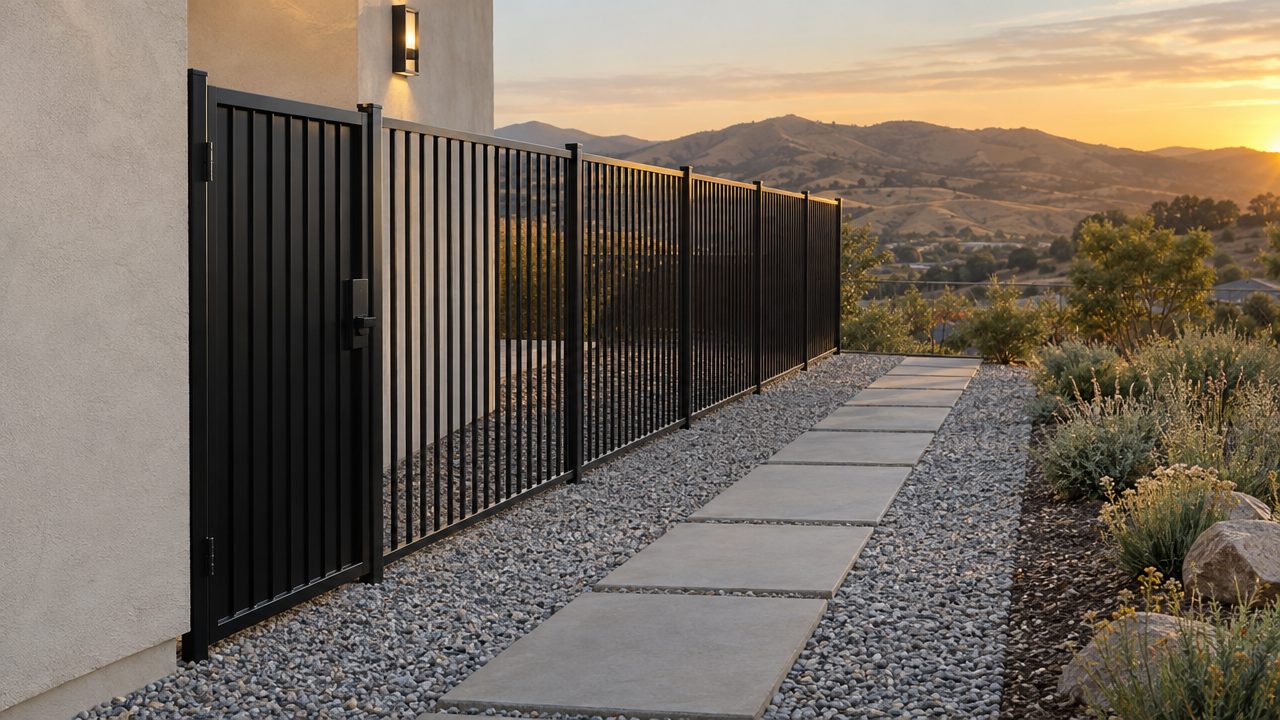
- No combustible fence or gate attached to the house.
- A 5-foot noncombustible span on every fence or gate that is attached to the house or comes within 1 foot of it, measured from the attachment point or the closest point.
- No new combustible fence or gate within 5 feet of the house after the effective date (the LRA text adds “whether attached or parallel”).
- Wood fence beyond the 5-foot span can stay and can be repaired with wood.
Noncombustible means material that passes the ASTM E136 test (1298.02(f); 1299.02(g)). Fence details are in Zone 0 fence requirements, what to do with the rest of the run is in existing wood fence and Zone 0, and the gate swap is covered step by step in replace a wood gate with metal.
Outbuildings ((b)(10) / (d)(10)):
- No shed or other outbuilding in Zone 0 unless it is built entirely of noncombustible materials.
What about Zone 1 and Zone 2?
These bands are not new. Public Resources Code 4291 (SRA) and Government Code 51182 (LRA Very High zones) already require 100 feet of defensible space, or to the property line. The SRA basics below come from 14 CCR 1299.03, which is in force today; the adopted text keeps them and starts Zone 1 at 5 feet. In the LRA, the Board’s August 2026 summary says local fire agencies set Zone 1 and 2 standards.
Zone 1 (5 to 30 feet in the adopted text):
- Dead or dying grass, plants, shrubs, branches, leaves, weeds and needles removed, including on the roof and gutters.
- Dead branches removed where they overhang the roof or sit near windows or walls.
- Exposed firewood moved unless fully covered in fire-resistant material.
- Flammable plants and items cleared from under and beside combustible decks, balconies and stairs.
Zone 2 (30 to 100 feet):
- Shrubs and trees spaced horizontally and vertically (the “Fuel Separation” or “Continuous Tree Canopy” method).
- Dead woody fuels removed; loose leaf and needle litter no deeper than 3 inches.
- Annual grasses cut to 4 inches or less.
- Exposed woodpiles cleared to bare soil for 10 feet in every direction.
What should I do after the list is done?
Photograph each side of the house. The Board’s guidance says that when you shop for insurance, sharing photos and information about your fuel management “may help make your home more attractive to insurers.” Then keep the list for upkeep, since Government Code 51182 and PRC 4291 require defensible space “at all times.”
What we don’t know yet
- The effective date, whether the Board will change any item before resubmitting, and where each city will set its LRA timeline between 3 and 5 years.
- When CAL FIRE can start enforcing in the SRA. Under PRC 4291(h) it first needs a written funding finding from the State Fire Marshal, which we had not seen as of 10 November 2026.
Questions people ask
What is on a defensible space checklist?
California's defensible space covers 100 feet from a home, set by Public Resources Code 4291 and Government Code 51182. Zone 0 (0 to 5 feet) is the strictest band: no combustible mulch, debris or firewood, trimmed trees, a plant-free strip at the walls and no combustible fence attached to the house, under the rule adopted 19 August 2026 and not in effect as of 10 November 2026. Zone 1 (5 to 30 feet) means removing dead plants and debris and keeping branches 10 feet from chimneys; Zone 2 (30 to 100 feet) means spacing shrubs and trees and cutting grass to 4 inches.
When does Zone 0 go into effect?
No date has been set as of 10 November 2026. The Board of Forestry adopted the rule on 19 August 2026, filed it with the Office of Administrative Law on 28 August and withdrew it on 8 September before OAL ruled. It takes effect only after OAL approves it and it is filed with the Secretary of State. Existing homes would then get 3 to 5 years for most items.
Keep reading
 GuideHow to comply with Zone Zero in California
 GuideZone 0 fence requirements in California
 Do I have to replace my wood fence for Zone 0?
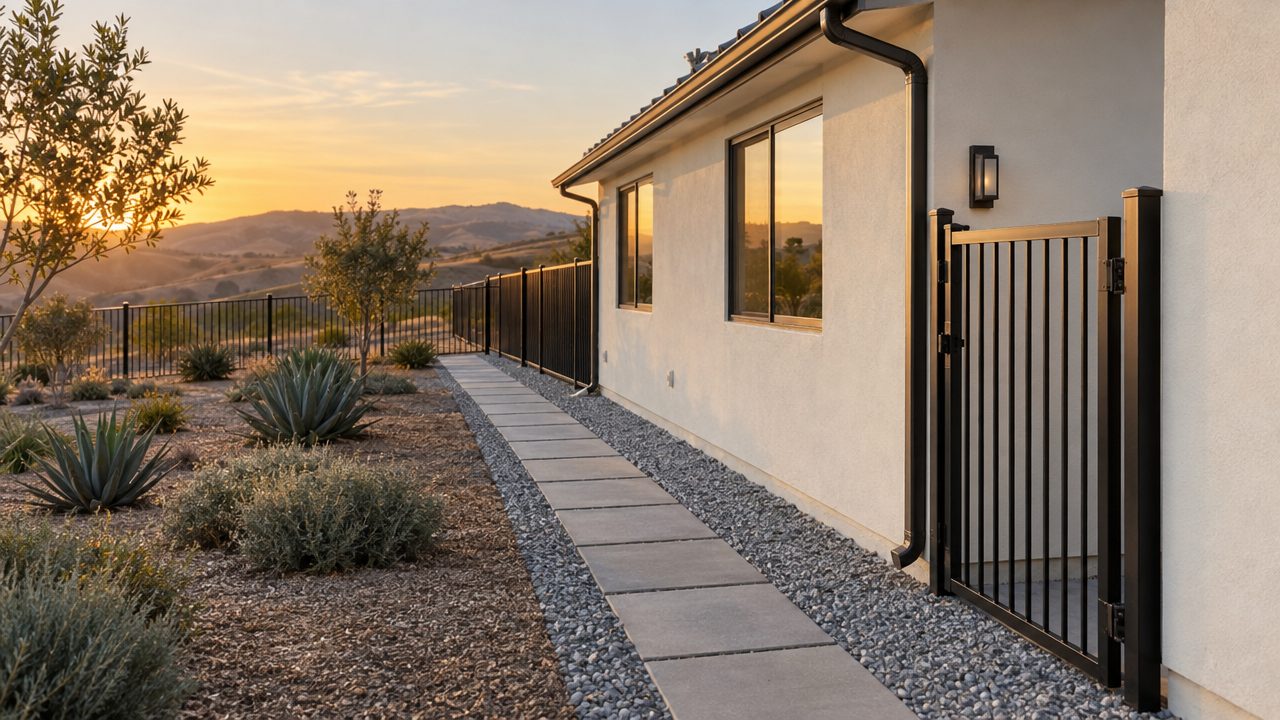 How to replace a wood gate with a metal gate
 Is Zone Zero a law in California? Status on Nov 10, 2026
More in How-to
Sources
- Board of Forestry, Zone 0 regulation summary and rule text as approved (14 CCR 1298 et seq., 1299 et seq.), .
- Board of Forestry, Zone Zero Guidance Document (dated September 2026, adopted 19 August 2026), .
- OAL, Recent Actions Taken on Emergency Regulations (file 2026-0828-03E, withdrawn 8 September 2026), .
- OAL, Emergency Regulations Under Review (no Board of Forestry entry when checked), .
- AB 3074 (Friedman), Chapter 259, Statutes of 2020 (Gov. Code 51182, PRC 4291), .
- AB 1455 (Bryan), Chapter 731, Statutes of 2025, .
- City of San Diego Fire-Rescue, Zone 0 Guidelines for Existing Structures (Rev. 4/22/2026), .
Spot an error? Tell us and we will correct it and note the change.