
In this article (10)
This is a city rule, in force today, and separate from the statewide Zone 0 regulation (state dates). Berkeley’s rule is stricter than the state text on fence repairs.
What is Berkeley’s EMBER ordinance?
EMBER stands for Effective Measures for Berkeley’s Ember Resilience. The council adopted the initiative on June 17, 2025, including the part that added Zone 0 to the city code. The rest of EMBER covers vegetation management, resident outreach, home hardening incentives and work with other agencies.
The Zone 0 rules came in through Ordinance 9,991-N.S. (second reading December 2, 2025), which created Berkeley Municipal Code Chapter 19.49, adopting the 2025 California Wildland-Urban Interface Code with local amendments. The Zone 0 rules are in section 604.3.2, which begins: “Effective January 1, 2026 the Grizzly Peak Mitigation Area and Panoramic Mitigation Area shall be subject to 604.3.2.”
Which Berkeley properties does it cover?
Two hillside areas, both designated by city ordinance as Very High Fire Hazard Severity Zone (section 302.3):
- Grizzly Peak Mitigation Area: everything east of Grizzly Peak Boulevard to the city line, plus homes addressed on or fronting either side of the boulevard.
- Panoramic Mitigation Area: the area inside a line of streets running from Centennial Drive to Dwight Way, with the city limit on the east.
The two areas hold “just under 1,400 properties,” out of more than 9,000 parcels in the city’s wider Very High zone. Check a specific address on the mitigation area maps in the city’s Community GIS Portal.
Elsewhere in Berkeley’s Very High zone, section 604.3.1 applies Zone 1 standards to the first 5 feet. The state rule adds Zone 0 requirements there from the day it takes effect.
What does Berkeley require within 5 feet of a house?
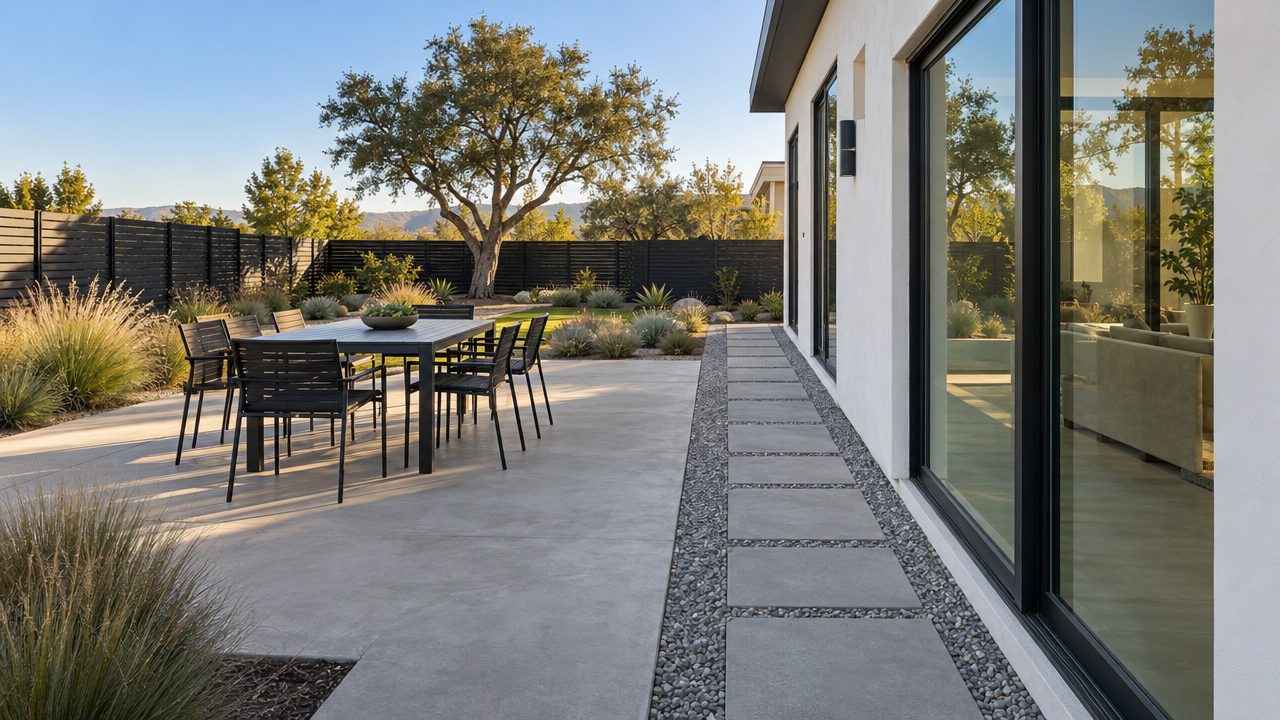
Everything within 5 horizontal feet of any structure, outbuilding, attached deck or stairs, and the area under attached decks and stairs, must be “free of vegetative and non-vegetative combustible material.” The code’s list runs from shrubs, vines, firewood and wood mulch to synthetic lawn, plastic trash cans, trellises, pergolas, planters and privacy walls. Gravel, pavers, concrete and bare soil are allowed.
The exceptions are narrow:
- Potted plants: only in noncombustible, unattached pots of 5 gallons or less, no taller than 18 inches, not directly beneath, above or next to a window or eave, and spaced 1.5 times the plant’s height or 12 inches, whichever is greater.
- Hot tubs: allowed within 5 feet if they meet the Zone 0 clearances that apply to structures.
- Existing trees and shrubs: allowed if kept free of dead material, with the canopy 6 feet above the roof, 10 feet from chimneys and 5 feet horizontally from walls, decks and stairs.
What does Berkeley’s ordinance say about fences?
The fence clauses, section 604.3.2(1)(d) and (e), read:
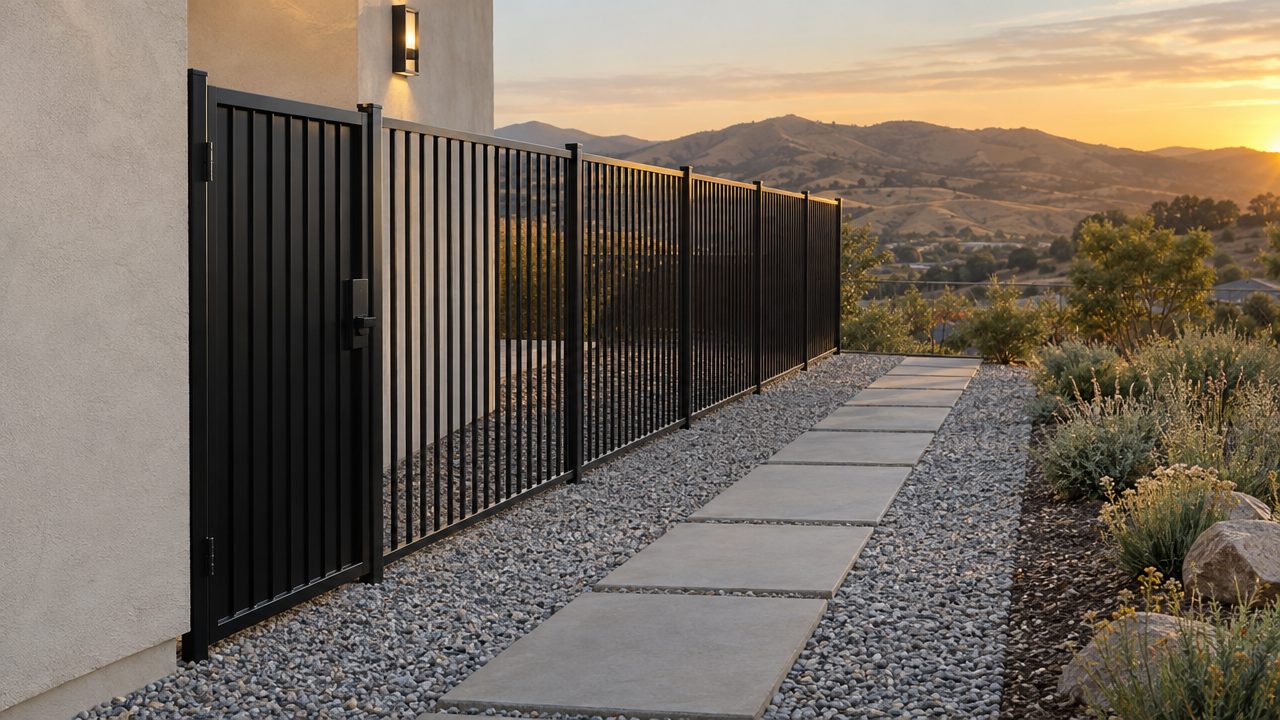
- “Existing fences that are directly attached to a Building or Structure shall have a five foot (5 ft) non-combustible span at the point of attachment.”
- “Existing fences that are not parallel to the adjacent structure wall, and are within 5 feet of that wall, shall have a non-combustible span within the first 5 feet of the structure perpendicular to the exterior structure wall.”
- “Existing parallel fences that do not touch the structure are allowed.”
- “After the effective date of this regulation, no new or replacement sections of combustible fence are permitted within 5 feet of a building or structure including an attached deck.”
In practice, a wood side fence that runs into the house wall needs its first 5 feet in metal or another noncombustible material, and so does one that angles toward the house and stops short of it. A wood fence running parallel to the wall without touching it can stay, but once a section of it inside 5 feet fails, the replacement cannot be wood. For that replacement ban, the 5 feet is measured from an attached deck as well as from the house.
The fence clauses do not use the word “gate,” but the city’s coaching worksheet for inspectors lists “Replace/Remove combustible gates/fences within 5’” as a priority item, so expect a wood gate at the house to be treated like a fence panel. A common summary, that no wooden structures may touch or come within five feet of a home, overstates the fence text: existing parallel fences that do not touch the house can stay.
How a 5 foot span is built is on Zone 0 fence requirements, and what to do with the rest of a wood run is on existing wood fence in Zone 0.
How does Berkeley’s rule differ from the state Zone 0 rule?
The state column is the text the Board of Forestry adopted on August 19, 2026, which may still change before it takes effect.
| Item | Berkeley (BMC 604.3.2, in force) | State rule (14 CCR 1298.04) |
|---|---|---|
| Start | January 1, 2026, for everything | New combustible fences barred from the effective date; existing attached fences get 3 years, or up to 5 on a local timeline (1298.04(c)(4)) |
| Fence attached to the house | 5 ft noncombustible span | 5 ft noncombustible span, also for fences within 1 ft of contact |
| Existing angled fence within 5 ft, not touching | Noncombustible span in the first 5 ft | No requirement unless within 1 ft of the house (1298.04(b)(9)(A)) |
| Existing parallel fence, not touching | Allowed | Allowed |
| Repairing an existing wood fence within 5 ft | No combustible replacement sections | Combustible repair materials allowed (1298.04(b)(9)(C)) |
| New combustible fence within 5 ft | Not permitted | Not permitted, “whether attached or parallel” |
| Outbuildings in Zone 0 | Allowed if built to building code Chapter 7A | Only if entirely noncombustible |
AB 1455 lets a local fire agency be stricter than the state (Government Code 51182(f)). The state standards will not immediately change the rules in the two mitigation areas, because Berkeley’s are stricter. On outbuildings in the 5 foot zone, though, the state text is the stricter one. San Diego’s local rule is stricter still on parallel fences; see San Diego Zone Zero fence rules, and for other cities, Zone 0 ordinances by city.
How is Berkeley enforcing it?
Mostly by inspection and coaching so far. The city narrowed its annual inspection area to the two mitigation areas so residents can book appointments, and inspectors spend up to an hour per property on a phased work plan. By September 2026 the city had done about 600 to 700 inspections, 30 to 35 homes had fully complied by July, and the city had not issued citations or billed for re-inspections.
The code does carry penalties. Section 109.3.7 treats violations as a public nuisance subject to abatement and allows administrative citations under BMC Chapter 1.28, with appeals under section 112. The city has also planned a “Wildfire Alternate Means and Measures” process for owners who meet the code’s intent another way.
Does Berkeley help pay for Zone 0 work?
Partly. City documents list a Resident Assistance Program, a home hardening mesh program, a eucalyptus understory program and free chipping. The city also offers neighborhood debris bins and home-hardening rebates, with financial help based on age, disability or income. None of these programs pays specifically for replacing fence sections. Statewide and regional options are on home hardening grants.
What should a Berkeley hills owner do first?
- Check the address on the mitigation area maps in the city’s Community GIS Portal. If you are inside either area, 604.3.2 applies now.
- Measure 5 feet out from every wall, attached deck and stair, and note anything combustible in that band, including under decks.
- List each fence that touches the house or angles toward it inside 5 feet. Each needs a noncombustible first 5 feet. Note any wood gate there, which the inspector worksheet flags.
- Plan replacements in metal or another noncombustible material. Any failed fence section inside 5 feet has to be replaced that way, even on a parallel fence that can otherwise stay.
- Book the inspection and ask for a phased work plan, which is how the city has been running them.
Questions people ask
What is Berkeley's EMBER ordinance?
It is the Zone 0 part of Berkeley's EMBER wildfire initiative, now in section 604.3.2 of Berkeley Municipal Code Chapter 19.49. Since January 1, 2026 it has required owners in the Grizzly Peak and Panoramic Hill mitigation areas to keep the first 5 feet around buildings, decks and stairs free of combustible material, with specific rules for fences.
What is the City of Berkeley EMBER program?
EMBER (Effective Measures for Berkeley's Ember Resilience) is a city strategy the council adopted on June 17, 2025. It covers vegetation management, resident engagement, home hardening incentives and partnerships with other agencies. The Zone 0 code is the part of it that property owners must follow.
What happens at a Berkeley Zone Zero inspection?
Owners book a scheduled appointment, and inspectors spend up to an hour walking the property and building a phased work plan. By September 2026 the city had done about 600 to 700 inspections and had issued no citations.
Keep reading



More in Local rules
Spot an error? Tell us and we will correct it and note the change.