In this article (10)
Powder coated aluminum can count as noncombustible, as of 10 November 2026. Section 501.4.1 of the California WUI Code accepts a base that passes ASTM E136 with a surfacing no thicker than 0.125 inch and a flame spread index of 50 or less under ASTM E84 or UL 723. That is the definition in California’s proposed Zone 0 rule, which is adopted but not in effect.
A coated fence therefore has to clear two checks. The aluminum underneath needs an E136 pass, and the coating needs its own E84 result and a thickness under the limit. Most thermoset powder coats are far thinner than 0.125 inch, so in practice the E84 paperwork is what decides it. The rule never mentions coatings. Reading 501.4.1 this way is our interpretation, and a local inspector would make the final call.
What does the WUI Code exception actually say?
Section 501.4.1 of the 2025 California Wildland-Urban Interface Code sets the main test: materials “shall be tested in accordance with ASTM E136 and pass the test,” or tested under ASTM E2652 using E136’s acceptance criteria. Its one exception reads:
“Materials having a structural base of noncombustible material as determined in accordance with ASTM E136, or with ASTM E2652 using the acceptance criteria prescribed by ASTM E136, and a surfacing of not more than 0.125 inch (3.18 mm) in thickness having a flame spread index not greater than 50 when tested in accordance with ASTM E84 or UL 723 shall be acceptable as noncombustible.”
The Board of Forestry’s Zone 0 rule, adopted 19 August 2026, defines noncombustible as materials that pass E136, “thus meeting the standard for ‘noncombustible materials’ described in Section 501.4.1” (14 CCR 1298.02(f); 1299.02(g)). In our reading, pointing to 501.4.1 brings the exception along with it. The rule text does not say so directly.
The rule is not in force. The Board filed it with the Office of Administrative Law on 28 August 2026 (file 2026-0828-03E) and withdrew it on 8 September 2026. On 10 November 2026 OAL’s under-review list showed no Board of Forestry entry. Our guide to what counts as noncombustible covers the definition in full.
What is a powder coat made of?
It is a plastic finish. The CEPE Safe Powder Coating Guideline (8th edition, April 2020) describes industrial thermosetting powders as a blend of “resins, curing agents, pigments and additives” that is extruded, ground into fine particles and sprayed with an electrostatic charge so it clings to the metal. The part then goes through an oven. In a thermoset powder, heat sets off a crosslinking reaction (the “cure”) that knits the resin into a hard film, according to a 2006 PCI Magazine article by Tim Brinner.
Powder coat is far thinner than the limit. Brinner contrasts thermoplastics with “a relatively thin 3.5 mils” of TGIC polyester, a common thermoset powder. That is 0.0035 inch, about one thirty-sixth of the 0.125 inch limit. Thermoplastic powders run thicker: “around 8 mils are common, but thicknesses of 100 mils and higher are routinely used.” A 100 mil coat is 0.1 inch, still under the limit but close, so a thick thermoplastic or multi-layer finish deserves a measurement on the data sheet.
Is powder coating flammable?
The loose powder is. CEPE says powder coatings are “mainly of an organic nature” and “Together with air, such products can form an explosive dust/air mixture,” which is why coating lines are built to control dust and ignition sources. That hazard applies to loose powder in the factory.
Once cured, the coat is a thin organic layer bonded to metal. The WUI Code does not ask that layer to pass E136 on its own. It caps how thick it can be and how fast flame can spread across it. NIST’s 2022 fence report cites a CSIRO study in which “noncombustible pre-painted and metallic-coated sheet steel fences provided significant protection against radiant heat,” so the researchers counted painted metal as noncombustible. That study looked at painted steel, not powder coated aluminum.
What does a “powder coat fire rating” mean?
It normally means an ASTM E84 (or UL 723) result. E84 gives a flame spread index, and Section 803.1.2 of the California Building Code sorts the results into classes:
| Class | Flame spread index | Smoke-developed index | Meets the 501.4.1 limit of 50? |
|---|---|---|---|
| A | 0 to 25 | 0 to 450 | Yes |
| B | 26 to 75 | 0 to 450 | Only if the actual index is 50 or less |
| C | 76 to 200 | 0 to 450 | No |
Those classes come from the interior finish chapter, and we use them here only as a reference. A “Class A” claim on a product page is a good sign, but for a Class B coating you need the number itself. A rating also belongs to the coating that was tested, so check that the report names the powder actually used on your product.
Why isn’t an E84 Class A rating enough on its own?
E84 and E136 answer different questions. E136 asks whether a material adds heat or flame when held in a 750 C (1382 F) furnace for up to 30 minutes. E84 measures how flame travels across a surface. The Aluminum Association notes that E84 “presumes that the material is capable of burning in the first place,” and that its scope calls it “unsuitable for determining the combustibility or noncombustibility of a material.”
So for a powder coated fence, the E84 result covers the coating and nothing else. The base metal still needs its E136 pass. The Aluminum Association reports that nine alloys and commercially pure aluminum passed E136 in 2011 and 2020 testing, but that is a trade group’s summary of alloys. It does not cover any specific fence product.
Section 501.4 adds a durability condition. A material cannot be classed as noncombustible “if it is subject to an increase in combustibility or flame spread beyond the limitations herein established through the effects of age, moisture or other atmospheric conditions.” We found no test data on whether weathering changes the flame spread of a powder coat. Some fence makers quote the AAMA 2604 finish spec, and the AAMA test list Hoover Fence publishes for its Key-Link fence covers adhesion, hardness, salt spray, humidity, color and gloss retention. It includes no fire test, so an AAMA 2604 claim is about durability and does not count as a fire rating.
Do wood-grain finishes and inserts change the answer?
They add parts to check. A wood-look film or printed finish is still a surfacing, so in our reading it needs its own E84 result and thickness under 501.4.1, the same as a plain powder coat. A plastic or composite slat, insert or privacy strip is not a surfacing. It is a separate material and would have to pass E136 on its own.
What should I ask a seller for?
For a coated aluminum panel or gate within 5 feet of the house, ask for:
- An ASTM E136 report for the alloy used in the posts, rails and pickets.
- An ASTM E84 or UL 723 report for the coating, showing the numeric flame spread index (50 or less) and naming the powder or film tested.
- The coating’s dry film thickness from the coater’s data sheet, to confirm it is 0.125 inch or less. For a standard thermoset powder this should be a formality.
- A parts list showing that hinges, latches, caps and any inserts are metal.
No state approval or listing program for Zone 0 products exists as of 10 November 2026, so “Zone 0 approved” on a product page refers to no state approval. If the rule takes effect as adopted, attached fences and gates would need a 5 foot noncombustible span from the house; see Zone 0 fence requirements. For how the bare metal behaves in heat, see does aluminum melt in a fire and is aluminum noncombustible. To compare finished products, see best fire resistant fence.
Questions people ask
What is the fire rating of powder coat?
Powder coat has no single fire rating. A coating's rating comes from an ASTM E84 or UL 723 test of that product, which gives a flame spread index; the California Building Code calls 0 to 25 Class A. For the WUI Code's noncombustible exception, the coating needs an index of 50 or less and must be 0.125 inch thick or thinner.
Is powder coating flammable?
The powder is. The CEPE Safe Powder Coating Guideline (2020) says powder coatings are mainly organic and can form an explosive dust and air mixture, which is why coating booths are built to control dust. Once cured, the coat is a thin plastic layer on the metal, and the WUI Code handles it by limiting its thickness and flame spread rather than requiring the coating itself to pass ASTM E136.
Keep reading
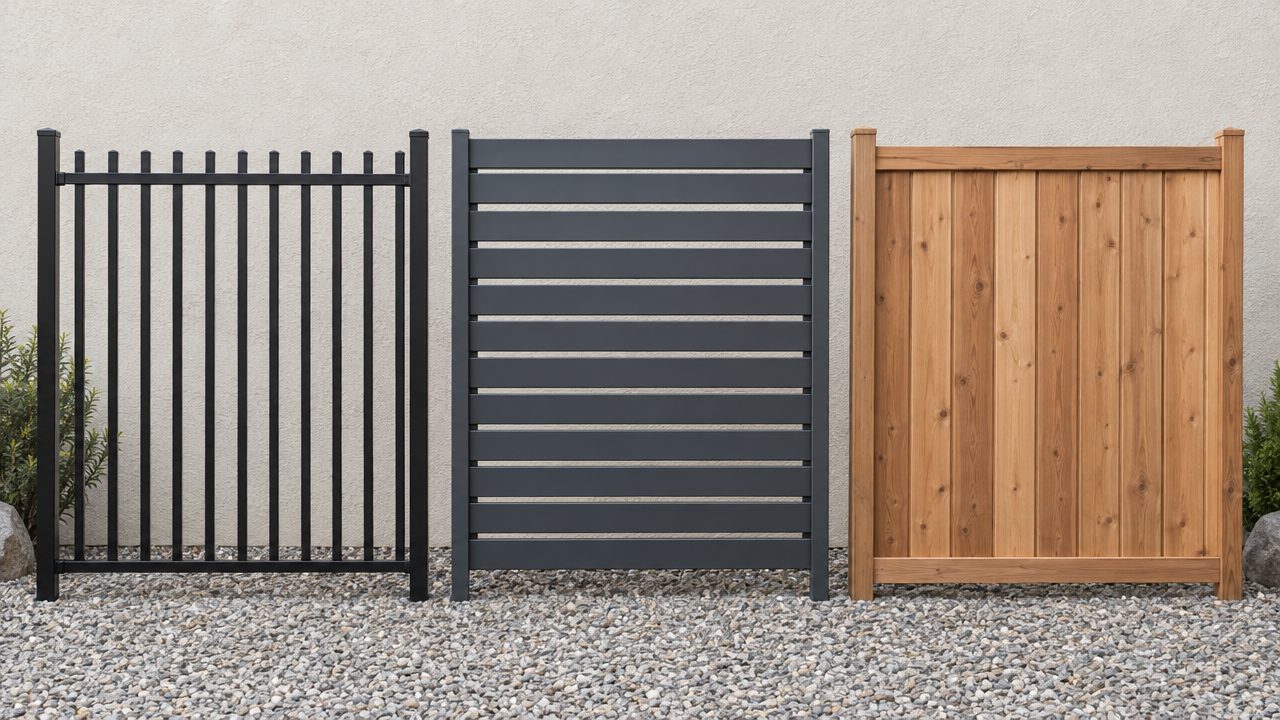 GuideWhat is noncombustible material? The Zone 0 definition
- Is aluminum noncombustible? What the E136 tests show
 Does aluminum melt in a fire? Wildfire and house fire heat
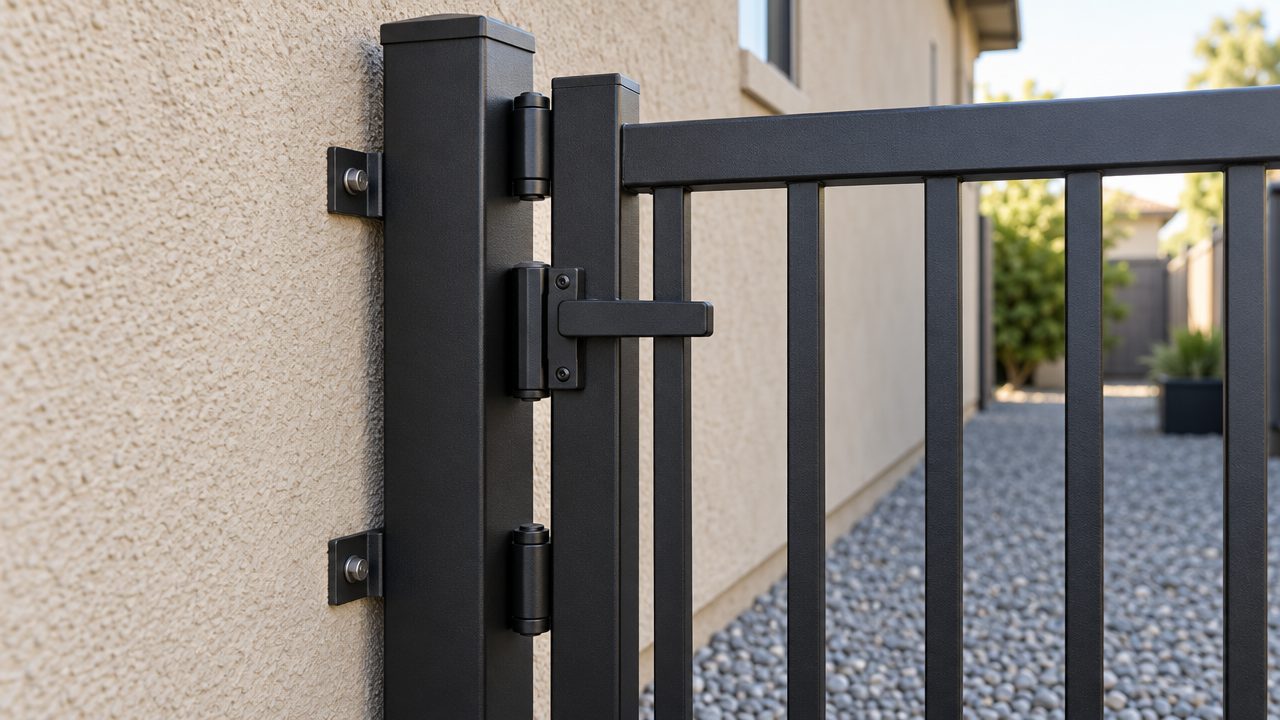 GuideBest fire resistant fence for Zone 0: materials compared
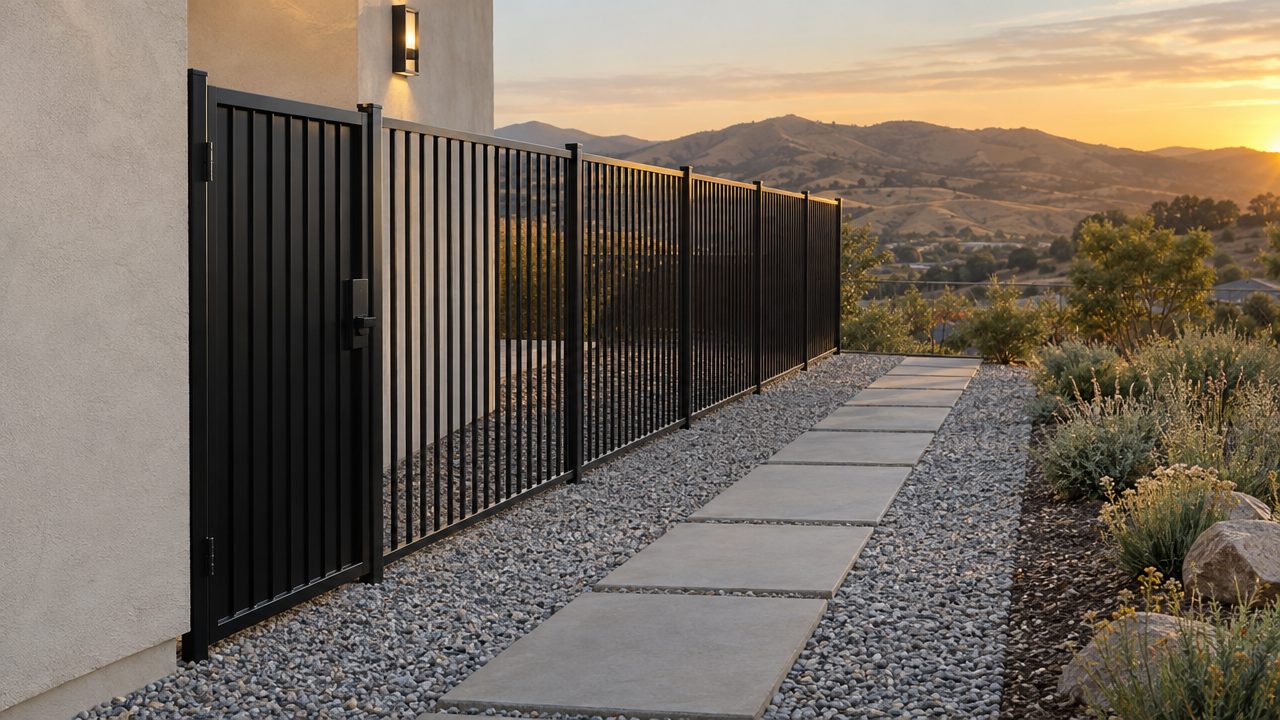 GuideZone 0 fence requirements in California
More in Noncombustible materials
Sources
- California Wildland-Urban Interface Code 2025, Chapter 5 (Sections 501.4 and 501.4.1), .
- California Building Code 2025, Chapter 8 (Section 803.1.2, ASTM E84 classes), .
- Board of Forestry, Zone 0 regulation summary and rule text as approved (14 CCR 1298 et seq., 1299 et seq.), .
- Aluminum Association, Fire Safety of Aluminum and Its Alloys (undated; accessed), .
- CEPE Powder Sector Group, Safe Powder Coating Guideline, 8th edition, .
- PCI Magazine (Tim Brinner), Thermoplastic powder coatings, .
- Hoover Fence, Key-Link aluminum fence powder coating technical data (AAMA 2603 and 2604 tests; undated, accessed), .
- NIST Technical Note 2228-upd1, Wind-Driven Fire Spread to a Structure from Fences and Mulch (Butler, Johnsson and others), .
- OAL, Recent Actions Taken on Emergency Regulations (file 2026-0828-03E, withdrawn 8 September 2026), .
- OAL, Emergency Regulations Under Review (no Board of Forestry entry when checked), .
Spot an error? Tell us and we will correct it and note the change.