In this article (9)
Fire Safe Marin, IBHS and NIST all treat vinyl as combustible. If a vinyl fence attaches to your house, plan on a metal section or gate for the first 5 feet once the rule takes effect.
Does vinyl count as noncombustible for Zone 0?
No. The rule defines Noncombustible as “Materials that pass the American Society for Testing and Materials (ASTM) E136 test,” the standard in Section 501.4.1 of the California Wildland-Urban Interface Code (14 CCR 1298.02(f); 1299.02(g)). It defines Combustible as “Vegetative, wood, or other materials that are likely to ignite and transmit flames in a wildfire.”
The rule never mentions vinyl by name, so treating it as combustible under the rule is our reading. It rests on three things: IBHS, Fire Safe Marin and NIST all class vinyl as combustible; we found no vinyl fence product with a passing E136 report; and the tests below show vinyl burning once debris at its base catches. Our noncombustible materials guide explains the E136 test itself.
The rule is adopted but not in effect. The Board filed it with the Office of Administrative Law on 28 August 2026 (file 2026-0828-03E) and withdrew it on 8 September 2026, before OAL ruled. On 10 November 2026 OAL’s list of emergency regulations under review showed no Board of Forestry entry.
How does vinyl fence behave in a fire?
The most detailed data we found is NIST Technical Note 2228 (August 2022, updated December 2022), which ran wind-driven fire tests on wood, vinyl and wood-plastic composite fences.
- Vinyl alone was hard to light. In a test without mulch, “It was difficult to ignite the fence using the propane burner,” and there was so little damage that NIST turned the same fence upside down and reused it.
- With mulch at the base, it burned. The fire “engaging the vinyl post” caused “intensification of the flames, a significant amount of black smoke, and thin blackened pieces of the fence skittering over the ground or lofted in the air.” The post, panel and bottom frame “blackened and distorted,” and the panel came loose from its frame. The fence in that test was attached to a test shed, and the mulch burned all the way to it.
- It made no firebrands. NIST’s summary says vinyl privacy fences “did not support significant burning under the tested wind conditions” and “No firebrands were generated.”
NIST put vinyl fences in its medium hazard group: fences that are combustible but “do not typically ignite nearby combustibles and do not cause significant downwind fire spread.” Most combustible fences, mulch beds and fence-mulch combinations landed one step higher, in the high hazard group. NIST’s recommendation is to replace combustible landscape features with noncombustible or low hazard ones when possible, noting that fire spread is more likely with wood and composite fences “than with fences made of vinyl or noncombustible materials such as stone, brick, or steel.”
Fire Safe Marin’s summary matches: vinyl “is also a combustible material,” is “less vulnerable to ignition from embers alone,” but “will still burn when exposed to flames from nearby burning debris” and “will deform when exposed to radiant heat.” UC ANR puts it more briefly: “Vinyl fences would likely melt during fire conditions.”
What does a vinyl fence “fire rating” mean?
Usually a flame spread class from ASTM E84. One vinyl fence brand, CertainTeed’s Bufftech, lists “Class A rating for flame spread” and “Self-extinguishing” among its features in an undated brochure posted by a dealer.
E84 measures how fast flame travels across a surface. The Aluminum Association’s fire paper points out that E84 “presumes that the material is capable of burning in the first place,” and that the standard’s own scope “notes that it is unsuitable for determining the combustibility or noncombustibility of a material.” So a Class A vinyl fence is still a combustible fence under a rule that relies on E136.
IBHS says the same thing from the insurance side. Its Wildfire Prepared Home checklist states: “Fire-resistant materials (e.g., vinyl, composite, or fire-rated coatings) are not permitted” within 5 feet of the home.
Can I keep my existing vinyl fence under the state rule?
Mostly yes. The adopted rule treats an existing vinyl fence like any other existing combustible fence:
- Attached or within 1 foot of the house: it would need “a five (5) foot Noncombustible span from the point of attachment or the point closest” to the house (14 CCR 1298.04(b)(9)(A); 1299.03(d)(9)). In practice that means swapping the house-end panel or gate for metal or another noncombustible material. See Zone 0 fence requirements for how the span is measured.
- Elsewhere: existing combustible fences may stay, and “Fence repairs to an existing Combustible fence may be made using Combustible replacement materials.” You can replace a broken vinyl picket with vinyl.
- New fences: “no new Combustible fences or gates (whether attached or parallel to the Occupied Structure) are permitted within five (5) feet” (1298.04(b)(9)(B)). A new vinyl fence within 5 feet of the house would not be allowed.
Nothing is due until the rule takes effect. Existing homes would then get 3 years in Local Responsibility Area Very High zones, or up to 5 on a local timeline (1298.04(c)(4)), and 5 years in the State Responsibility Area, or no less than 3 on a CAL FIRE timeline (1299.03(e)(4)).
Does San Diego allow vinyl fences in Zone 0?
In one narrow case. San Diego’s Zone 0 Guidelines (Rev. 4/22/2026) apply to new structures since 28 February 2026 and to existing ones from 28 February 2027, with full compliance, fences and gates included, targeted for 28 February 2029. They say that under an approved compliance plan “all existing fences and gates within 5 feet of the structure must be made of non-combustible material.” The first exception covers “Existing Vinyl and fencing without combustible reinforcement” within 5 feet, provided that:
- it runs parallel to the structure walls;
- it is no less than 4 feet from the structure;
- it doesn’t present an unreasonable fire risk due to its condition, height or fuel accumulation;
- it is maintained free of debris; and
- no vegetation exists between the fence and the structure.
So an existing vinyl fence running alongside the house 4 feet or more away can stay in San Diego. An attached one still needs the city’s “minimum 5-foot non-combustible transitional span.” The guidelines also warn that “Your insurance provider and/or the IBHS may not allow vinyl or FRTW within 5 feet of a structure.” Our San Diego Zone Zero fence rules page covers the rest.
What should I do with a vinyl fence near my house?
- Find where it meets the house. If it attaches, or ends within 1 foot, the first 5 feet is the part that would have to change. A metal gate or panel there breaks the path to the wall.
- Keep the base clean. NIST’s vinyl fence only burned in earnest once mulch at its base caught. Fire Safe Marin tells owners to remove vegetative debris from the base of vinyl fencing, as with any fence.
- Don’t build new vinyl within 5 feet. If you are replacing a run anyway, use a noncombustible material inside Zone 0. Our best fire resistant fence comparison covers steel, aluminum, masonry and the rest, and is aluminum noncombustible answers the usual question about metal.
- Check your insurance goal. The California FAIR Plan discount item requires “only noncombustible materials incorporated into any improvements to the property, including fences and gates, within 5 feet of the dwelling,” and IBHS lists vinyl among the materials to replace in that zone. By our reading, a vinyl fence within 5 feet rules out that FAIR Plan item and the IBHS designation, even where the law lets the fence stay.
Questions people ask
Is vinyl fence flammable?
Yes, though it is harder to light than wood. In NIST's 2022 tests a vinyl privacy fence on its own was difficult to ignite with a propane burner, but with mulch at its base the post, panel and frame blackened and distorted. Fire Safe Marin says vinyl 'will still burn when exposed to flames from nearby burning debris.'
What is the fire rating of a vinyl fence?
Some makers advertise a Class A flame spread rating, which comes from the ASTM E84 surface burning test. That is a different test from ASTM E136, which California's adopted Zone 0 rule uses to define noncombustible, and E84's own scope says it can't determine whether a material is combustible. A Class A vinyl fence is still combustible for Zone 0 purposes.
Is aluminum or vinyl fence better for fire?
Aluminum. The Aluminum Association reports that the aluminum alloys it had tested to ASTM E136, the test the Zone 0 rule uses to define noncombustible, all passed. Vinyl is combustible, and IBHS tells homeowners to replace vinyl fencing within 5 feet of the home with metal. The state rule was adopted on 19 August 2026 but was not in effect as of 10 November 2026.
Do fences spread wildfire to homes?
They can. NIST's 2022 report says most combustible fences can act 'as a wick to spread fire toward a structure in the time of minutes to an hour or so.' It rated vinyl fences a medium hazard, a step below most combustible fence and mulch combinations, but vinyl still burned and distorted when mulch at its base caught fire.
Keep reading
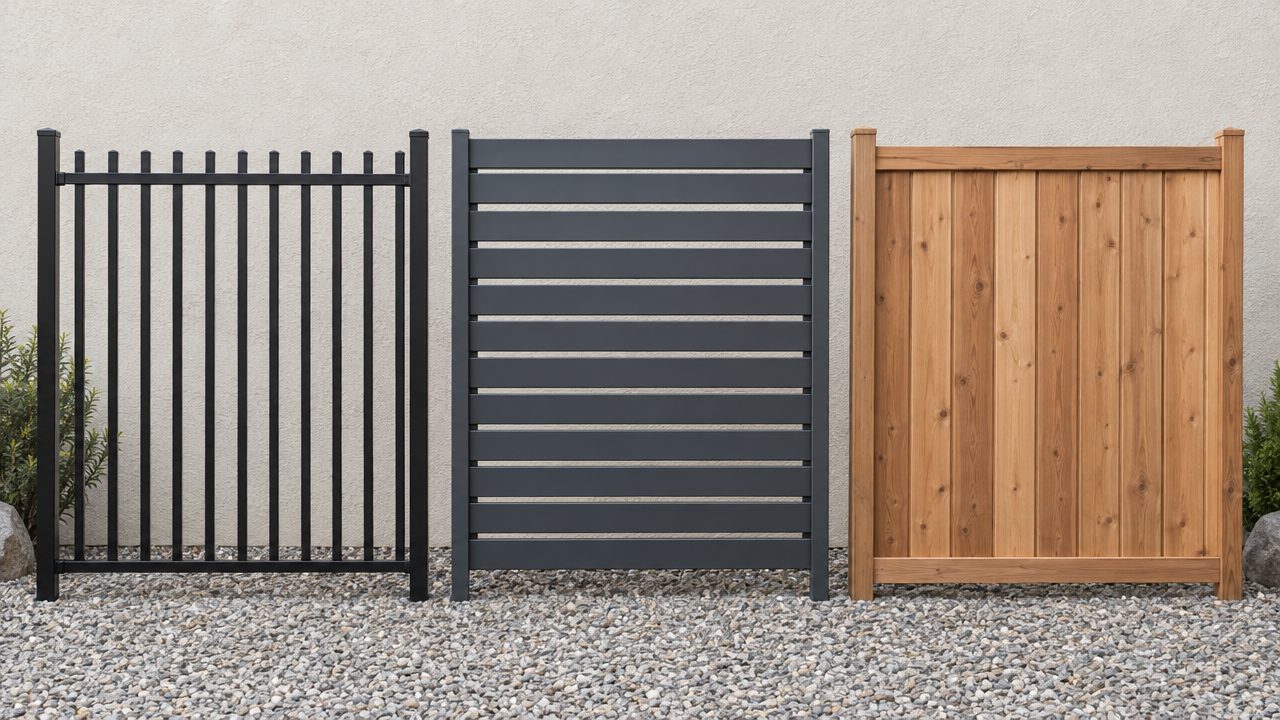 GuideWhat is noncombustible material? The Zone 0 definition
- Is aluminum noncombustible? What the E136 tests show
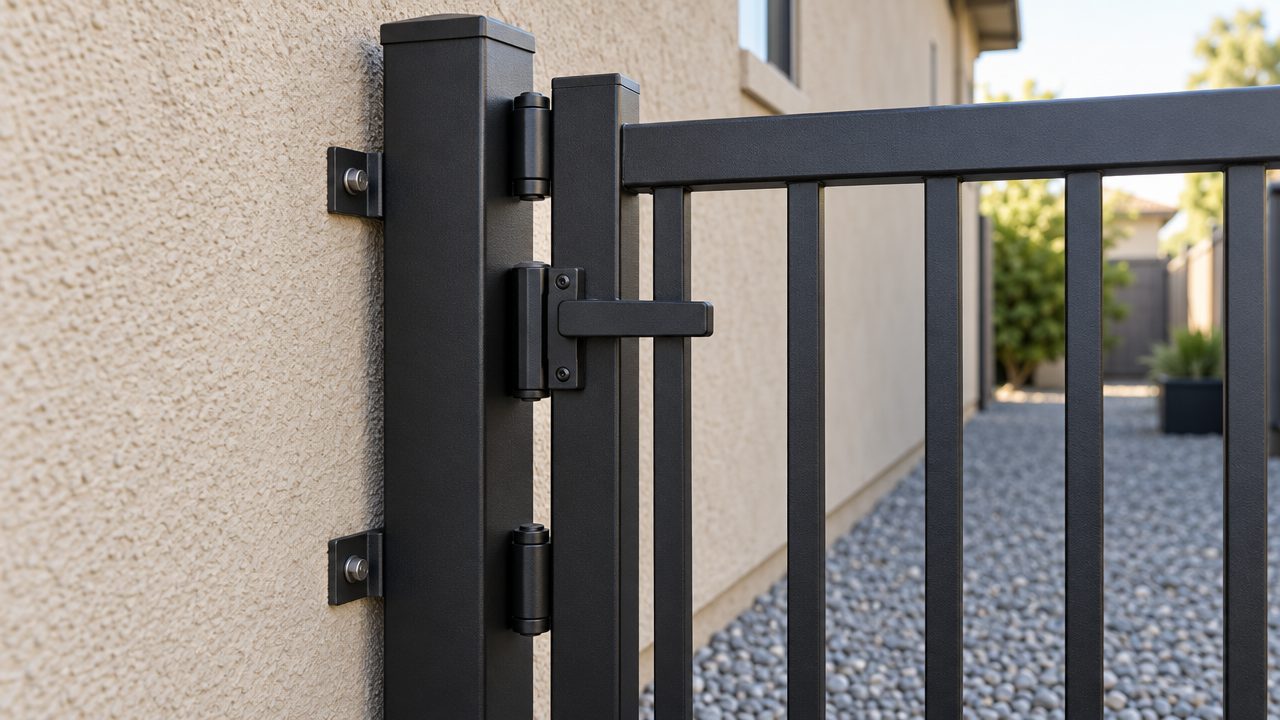 GuideBest fire resistant fence for Zone 0: materials compared
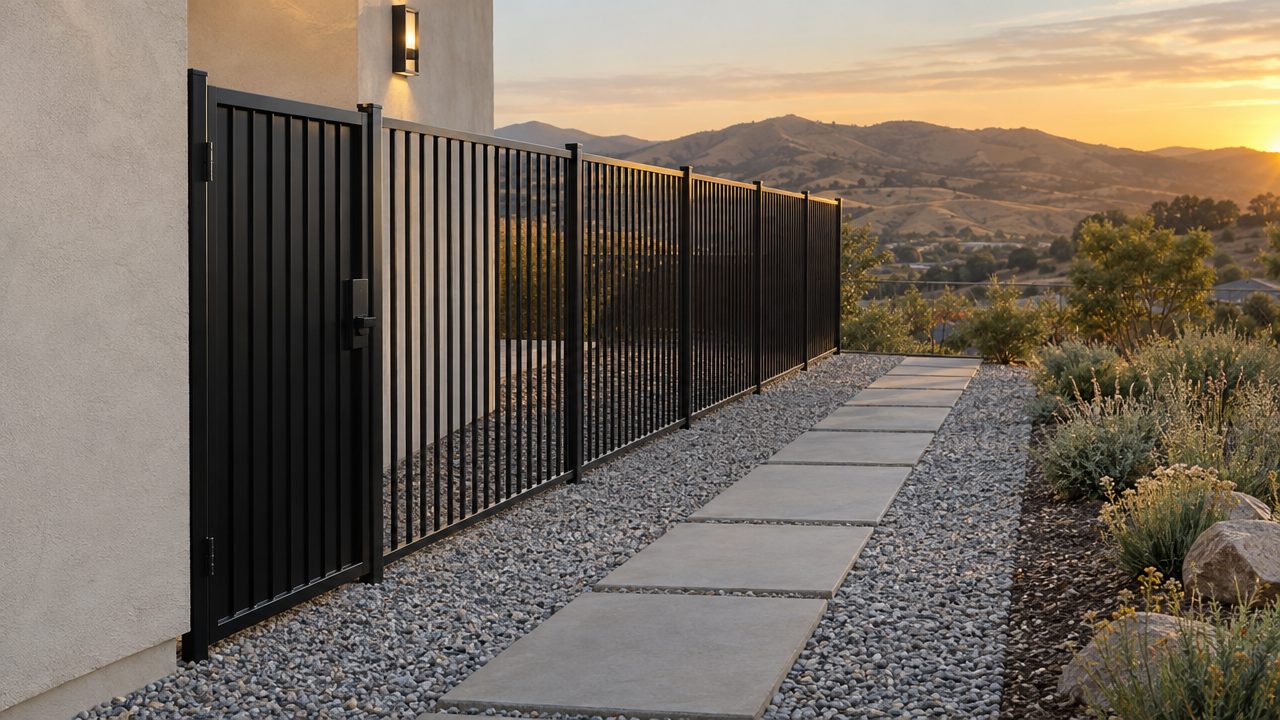 GuideZone 0 fence requirements in California
 Zone Zero fencing in San Diego: the city's fence rules
More in Noncombustible materials
Sources
- Board of Forestry, Zone 0 regulation summary and rule text as approved (14 CCR 1298 et seq., 1299 et seq.), .
- OAL, Recent Actions Taken on Emergency Regulations (file 2026-0828-03E, withdrawn 8 September 2026), .
- OAL, Emergency Regulations Under Review (no Board of Forestry entry when checked), .
- NIST Technical Note 2228-upd1, Wind-Driven Fire Spread to a Structure from Fences and Mulch, .
- Fire Safe Marin, Fences, .
- UC ANR Fire Network, Fence, .
- IBHS Wildfire Prepared Home, How-To Prepare Checklist (undated, read 10 Nov 2026), .
- Aluminum Association, Fire Safety of Aluminum and Its Alloys (on ASTM E84 scope; undated, accessed), .
- CertainTeed Bufftech vinyl fence brochure, Why choose vinyl vs wood (undated, hosted by a dealer), .
- San Diego Fire-Rescue, Zone 0 Guidelines for Existing Structures (Rev. 4/22/2026), section 4.6, .
- California FAIR Plan, discounts for Dwelling Fire and Commercial policies, .
Spot an error? Tell us and we will correct it and note the change.