
In this article (8)
California’s three defensible space zones, measured out from the house.
See the rule detailsZone Zero in California, also called Zone 0 or the ember-resistant zone, is the strip within 5 feet of a building where nothing that embers can easily ignite is supposed to sit: no bark mulch, firewood or shrubs against the walls, and no wood fence or gate fastened to the house. It is written into state law, and the Board of Forestry’s rule spells out what is allowed there (when it takes effect).
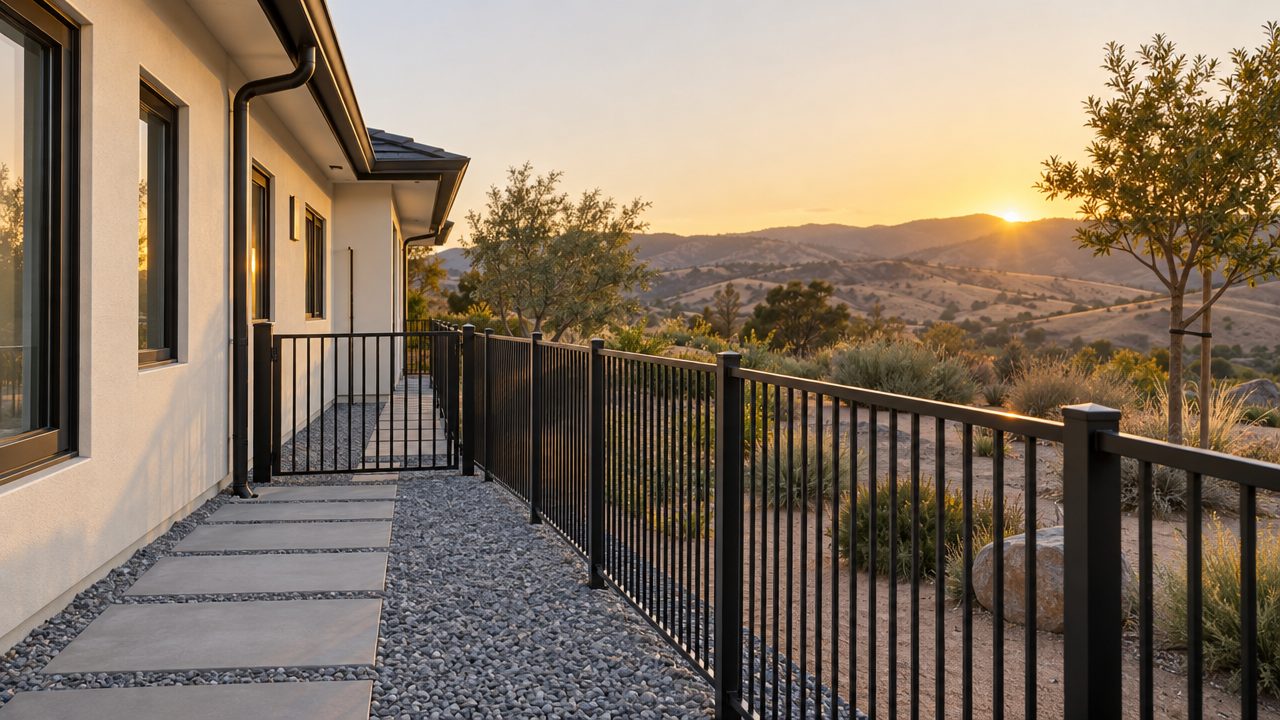
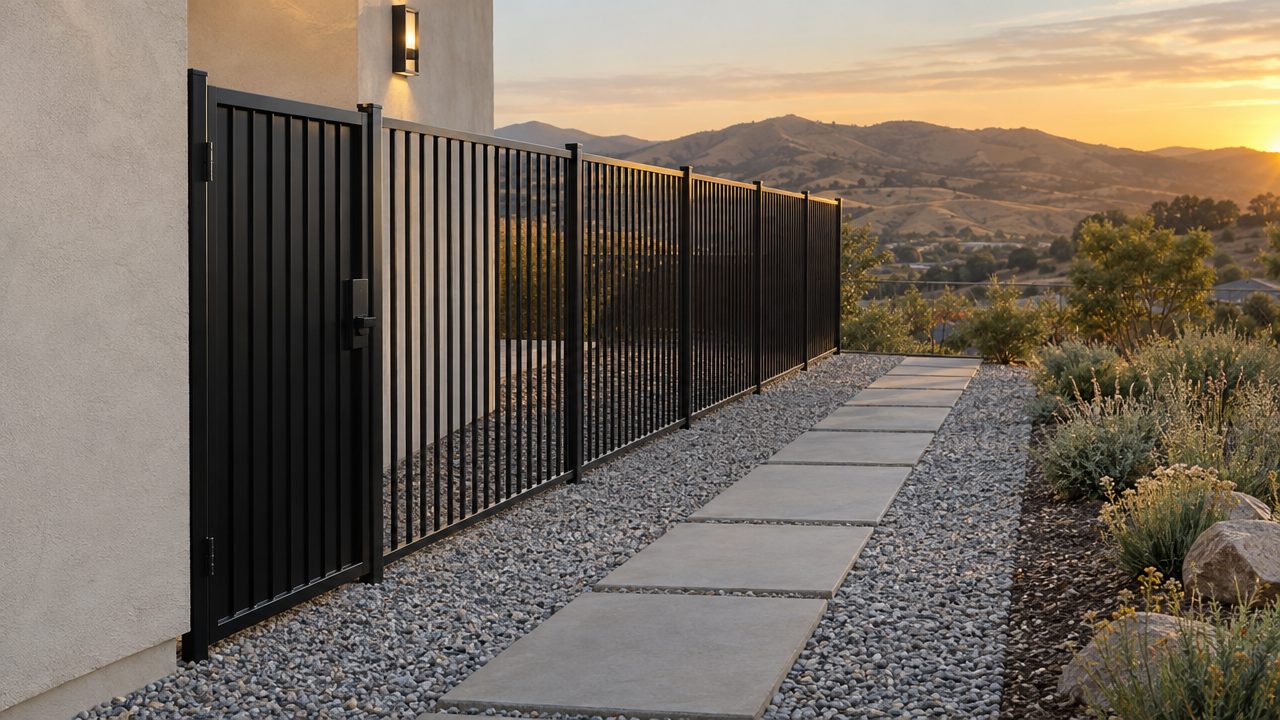
For most homeowners the one item that means building work is the fence or gate at the house: the rule asks for a noncombustible section, such as metal, on the first 5 feet. The statutes and deadlines are on the Zone Zero California law page. This page covers the definition itself.
Where does the name Zone Zero come from?
California already had two defensible space zones before the ember-resistant zone existed. The Board’s September 2026 guidance gives the history: Public Resources Code 4291 set a 30 foot clearance in 1965, and the Board added a second zone out to 100 feet in 2006. Those became Zone 1 and Zone 2. AB 3074 (2020) then added “an ember-resistant zone being required within 5 feet of the structure.” In the guidance’s words, it “became coined ‘Zone 0’ to fit into the Zone 1 and 2 naming convention.”
So “Zone Zero” is a nickname. The statute’s term is the ember-resistant zone, and the Board’s rule text uses “Zone 0.”
How do Zones 0, 1 and 2 fit together?
All three are measured outward from the building. The table below stands in for the usual ring diagram. Picture the house in the middle and each row as a band around it.
| Band | Distance from the building | What it is for | Rule |
|---|---|---|---|
| Zone 0 | 0 to 5 ft | Protect the base of the wall, the eaves and the area under decks from embers, flame contact and radiant heat | Board of Forestry rule, 14 CCR 1298.04 and 1299.03 |
| Zone 1 | 5 to 30 ft | Keep fire from burning straight to the building and give firefighters room to work | In force |
| Zone 2 | 30 to 100 ft, or to the property line | Drop an approaching fire “from the crown to the ground” by spacing trees and shrubs | In force |
The statute frames the same layout: fuel management “may vary within the 100-foot perimeter of the structure, with more intense fuel reductions being utilized between 5 and 30 feet around the structure, and an ember-resistant zone being required within 5 feet” (PRC 4291(a)(1)(A), as amended through AB 1455). The Board’s rule spells out the bands at 14 CCR 1299.03(a), and 1299.03(b) says the vegetation requirements for Zone 0 are more restrictive than Zone 1’s, and Zone 1’s more restrictive than Zone 2’s.
Two details are easy to miss. Zone 0 starts at the outside of “the exterior wall, roof, attached deck, stairs, or pergola,” so a deck pushes the zone outward (1298.04(a)). And the zone stops at your property line. A neighbor who builds a new house or ADU near the line does not create Zone 0 work on your lot.
Why is the first 5 feet treated differently?
The Board’s rule summary says the first 5 feet is “where wind-blown embers are most likely to land, and where homes are most vulnerable to ignition.” The guidance explains how. Wind carries embers ahead of the fire front. They hit a wall or fence, fall to the ground, and gather where leaves and debris have already collected. If bark mulch, a juniper or a stack of firewood is sitting there, the embers can light it, and the flames are then touching the house.
The base of the wall is a weak spot. The guidance notes that many walls have no metal flashing at the bottom edge, and that even under stucco the plywood or OSB sheathing is often exposed behind the weep screed. A small fire in the mulch can reach that sheathing. Under the eaves, wood framing and attic vents can trap heat and let embers in.
Keeping the plants green does not fix this. The guidance says California’s fire history shows “houses surrounded by green vegetation still burn,” because embers ignite the dry litter at the base of the plants. When green shrubs survive next to a burned house, the Board attributes that to ember landing patterns, wind shifts, suppression efforts “or simple chance,” and describes the pattern as “correlated observation, not causal information.”
Fences matter for a related reason. The guidance describes an attached wood fence or trellis as a fuel ladder that carries fire from the yard to the wall, and shows a metal panel or gate at the house end breaking that path.
What does Zone 0 change at a typical house?
Here is a common suburban layout checked against the Board’s 19 August 2026 text. The section numbers are from the Local Responsibility Area version of the rule (14 CCR 1298.04), which covers homes where a city or county fire department handles wildfire protection; the version for CAL FIRE areas, 14 CCR 1299.03(d), uses the same item numbers. From the day the rule takes effect, existing homes have to clear roof debris and dead branches immediately, mulch and firewood within 3 years, and the plant, fence and shed items within 3 years, or up to 5 if the local fire agency sets a longer timeline (1298.04(c)(2) to (c)(4)). In CAL FIRE areas the plant, fence and shed items get 5 years, or a timeline set by the CAL FIRE Director of no less than 3 years (1299.03(e)(4)).
| Common setup today | What the rule says | Section |
|---|---|---|
| Bark or wood-chip mulch in the beds along the walls | No combustible mulch, leaves or debris anywhere in the 5 feet | (b)(1) |
| Shrubs under windows and against the siding | No vegetation under eaves, within 1 ft of the wall where there is no eave, or within 2 ft of windows, doors, posts and vents; elsewhere in Zone 0 only non-woody plants, so shrubs go | (b)(6), (b)(7) |
| Low groundcover or lawn 3 to 4 ft out | Allowed if non-woody, well kept and under 3 inches; clumps up to 18 inches if each is no more than 1 sq ft and spaced apart | (b)(7) |
| Firewood stacked against the garage | No firewood stored in Zone 0 | (b)(4) |
| Wood side gate or fence hinged to the house | No combustible fence or gate attached; a 5 ft noncombustible span at the house end | (b)(8), (b)(9) |
| Mature tree with branches over the roof | Tree can stay; no dead branches, none under the eaves, at least 5 ft above the roof and 10 ft from a chimney | (b)(5) |
| Small wood shed against the house | Sheds under 120 sq ft must be entirely noncombustible to stay in Zone 0 | (b)(10) |
The fence and gate row is the one that usually means building work rather than cleanup. The required change is limited to the 5 feet at the house end, which is covered in the Zone 0 fence requirements guide. The full item-by-item list with deadlines is the Zone 0 checklist.
Does Zone Zero apply to every California home?
No. The state requirement covers buildings in the State Responsibility Area (SRA, the mostly rural land where CAL FIRE is responsible for wildfire protection) and occupied structures in Very High Fire Hazard Severity Zones designated by cities and counties. A house in a city’s High or Moderate zone is outside the state rule unless a local ordinance reaches it. How to check a specific address is on who Zone Zero applies to.
What can I do with this now?
Start by finding out whether your parcel is covered. If it is, the items the guidance calls “currently required under state law” are a reasonable place to begin: roof and gutter debris, dead branches, and branches near the chimney. Then walk the 5 foot strip with the table above and note anything combustible touching the walls, especially a wood gate or fence that meets the house. If you are replacing that fence or gate anyway, make the first 5 feet noncombustible now; a new wood one there is barred from the day the rule takes effect. Bring the list to your local fire agency, and ask whether it has adopted its own Zone 0 ordinance and what timeline it plans to use.
Where the 5 feet start, and the plant-free strips inside them.
See the rule detailsQuestions people ask
What is zone 0, zone 1 and zone 2?
They are the three bands of California defensible space, measured from the building. Zone 0 runs from 0 to 5 feet and targets embers. Zone 1 runs from 5 to 30 feet and keeps fire from burning straight to the house. Zone 2 runs from 30 to 100 feet, or to the property line, and slows an approaching fire. Zones 1 and 2 are already enforced; the Board of Forestry adopted the Zone 0 rule on 19 August 2026.
What is the 5 foot rule in California?
People usually mean Zone 0: the requirement in Public Resources Code 4291 and Government Code 51182 for an ember-resistant zone within 5 feet of a building in the State Responsibility Area or a local Very High Fire Hazard Severity Zone. The Board of Forestry's rule lists what may stay in those 5 feet, including the 5 foot noncombustible section on fences and gates that meet the house.
What is the ember resistant zone in California?
It is the legal name for Zone 0. AB 3074 (2020) added the phrase "an ember-resistant zone being required within 5 feet of the structure" to state law and told the Board of Forestry to consider eliminating materials in that zone "that would likely be ignited by embers."
Keep reading


More in Law and deadlines
Spot an error? Tell us and we will correct it and note the change.