
In this article (10)
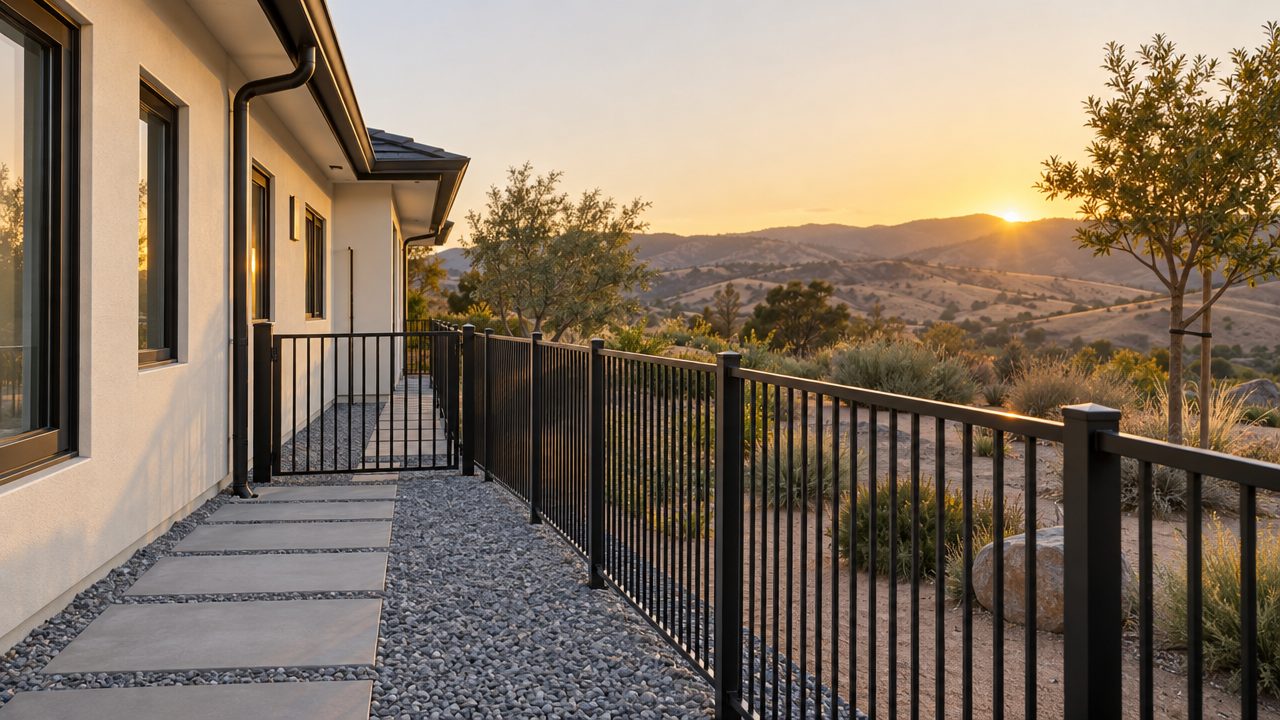
The first 5 feet of fence from the house must be noncombustible. The rest can stay wood.
See the rule detailsThe Zone Zero update for November 2026 is that the California Board of Forestry and Fire Protection adopted revised emergency Zone 0 regulations on November 5, 2026, after withdrawing its August package. For fences, the revision says a fence or gate attached directly to a structure must be entirely noncombustible, keeps the 5 foot noncombustible span on fences that meet the house, and exempts repairs to existing fences and gates.
The revised rules take effect when the Office of Administrative Law (OAL) approves them and files them with the Secretary of State. The Board’s public notice anticipates submitting them to OAL on or after November 13, 2026. The details below follow the Board’s notice as Sonoma Valley Fire District summarizes it; the wording that binds homeowners is the text OAL files.
What do the revised rules say about fences and gates?
The revised regulations have four fence and gate provisions:
- A fence or gate attached directly to a structure must be made entirely of noncombustible material.
- A fence or gate that is attached to or comes within one foot of a structure must have a five-foot noncombustible span beginning at the attachment point or the point closest to the structure.
- A new fence or gate installed within five feet of a structure must be made entirely of noncombustible material.
- The fence and gate provisions exempt repairs to existing fences and gates.
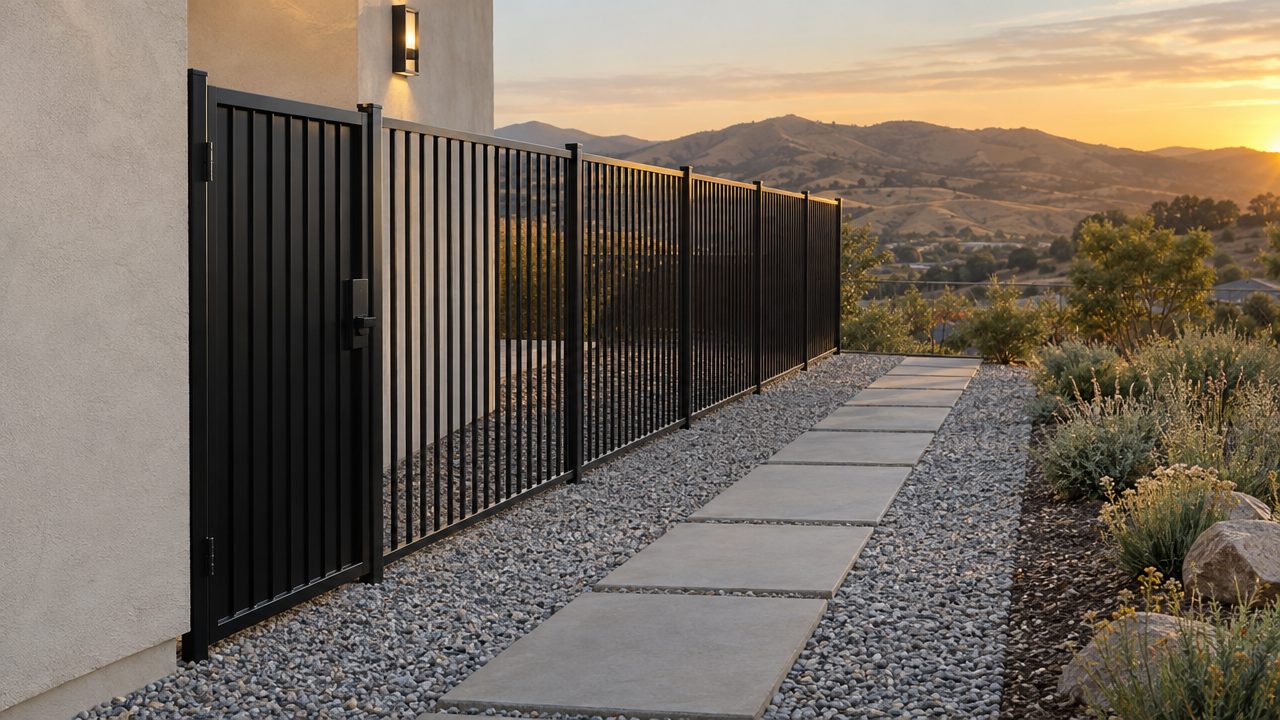
The summary does not say whether “entirely” in the first line reaches a whole fence run that is fastened to the house, or only the gate or panel that touches the wall. The second line still asks for a 5 foot span on an attached fence, which points to the narrower meaning. Base any decision about fence past the first 5 feet on the text OAL files. Either way, a gate hung directly on the house wall has to be all noncombustible, such as steel or aluminum.
The summary also does not define where a repair ends and a replacement begins. How the August text treated that line, and how the 5 feet is measured, are on Zone 0 fence requirements and do I have to replace my wood fence.
What should homeowners do now?
Both the August text and the November text point the same way on fences.
- Do not build a new wood or vinyl fence or gate within 5 feet of the house. Under the November text, a new one there has to be entirely noncombustible from the effective date. If a fence near the house is due for replacement anyway, build the part within 5 feet in metal or masonry now.
- Plan the house end of any fence that touches the house or stops within 1 foot of it. Measure 5 feet along the fence from the attachment point or the closest point, and list every gate, post and panel inside that mark. A gate hung on the house wall is the first piece to replace. Options are on wood fence attached to house.
- Do the free work. Clear roofs and gutters, move firewood out of the first 5 feet, clear under decks and stairs, and swap bark or wood-chip mulch near the walls for gravel.
- Ask your fire agency about timing. In an LRA Very High zone, ask whether your city or county plans an ordinance for a later final-phase deadline. Sonoma Valley Fire’s Fire Prevention Bureau takes questions at 707-996-2102.
What did the Board of Forestry adopt on November 5, 2026?
Revised emergency regulations for Zone 0, the 5 foot ember-resistant area around homes and other structures. The rule references are proposed 14 CCR 1298.02 to 1298.04 (Very High Fire Hazard Severity Zones in Local Responsibility Areas, where a city, county or district fights fires) and 1299.02 to 1299.03 (the State Responsibility Area, where CAL FIRE does). Those are the same sections the August text used.
Who is covered has not changed: SRA properties, and LRA properties in a Very High zone. Zone 0 does not apply to LRA properties outside a designated Very High Fire Hazard Severity Zone.
The Board voted 8 to 0 on August 19, 2026, filed the package with OAL on August 28 and withdrew it on September 8, before OAL ruled. Board staff said in October that OAL had raised questions, including about the emergency rulemaking authority. The full rulemaking history is on Board of Forestry Zone Zero regulations.
What changed from the August 19 text?
Most of the rule carries over. The 5 foot zone, the ban on combustible mulch and firewood, the 5 foot noncombustible fence span, the 120 square foot outbuilding rule, the inspector’s temporary mulch exception for erosion control during construction or an emergency, and the use of the building permit application date to separate new construction from existing homes all appear in both. Nine points read differently in the November text than in the August 19 rule text:
- Fences or gates attached directly to a structure. August: “Combustible fences and gates shall not be attached to an Occupied Structure” (14 CCR 1298.04(b)(8)). November: a fence or gate attached directly to a structure must be made entirely of noncombustible material.
- New fences moved onto the day-one schedule. The August ban on new combustible fences within 5 feet applied “After the effective date,” but the August compliance schedule grouped every fence item into the 3 to 5 year phase. The November schedule lists new fences and gates within 5 feet at the effective date.
- Gate repairs. August allowed “Fence repairs to an existing Combustible fence” with combustible materials. November exempts repairs to existing fences and gates, naming gates as well.
- No new trees. The Board’s August summary said no new trees could be planted, but the August 19 rule text has no such clause. The November text prohibits planting new trees in Zone 0.
- Branch clearances near decks and openings. The November tree rules list live branches at least 5 feet from attached decks, stairs and pergolas and at least 2 feet from windows, doors and vents. The August tree list (14 CCR 1298.04(b)(5)) did not name these distances; they appeared only as vegetation-free buffers in (b)(6). The filed text will show whether this is new substance or a restatement.
- Plant spacing. August spaced small plantings and potted plants apart by 1.5 times the plant’s height. November uses a flat 2 feet, measured between the widest points of the plants, and measures potted plant height from the base of the visible plant.
- Where Zone 0 stops. August ran 5 feet out or to the property line. November stops sooner at the property line or another qualifying building or structure, and a roofed patio cover may count as a structure depending on its design. The August definition of a structure already covered anything with a permanent roof on walls or posts, so the patio cover note may be a clarification rather than a change.
- Branches under eaves moved later. August required existing homes to keep live branches out from under eaves on the effective date (14 CCR 1298.04(c)(2)). The November schedule puts the effective-date tree items at dead branches and the 10 foot chimney clearance, and moves the eave clearance into the 3 year phase with the other live-branch clearances.
- Who can set a later deadline. August gave existing LRA homes 3 years, or up to 5 “on a timeline set by the local agency responsible for fire protection.” November requires a later LRA deadline to be set by local ordinance supported by a written finding. For the SRA, August set 5 years or a CAL FIRE Director timeline of at least 3; in November the Director sets the schedule.
August 19 text vs November 5 text
Rows marked “No change” are ones where the November summary matches the August wording; the filed text could still differ.
| Topic | August 19, 2026 rule text | November 5, 2026 text | Difference |
|---|---|---|---|
| Who is covered | SRA, and LRA Very High zones | SRA, and LRA Very High zones | No change |
| Where Zone 0 stops | 5 ft or the property line | 5 ft, the property line, or another qualifying structure | Added |
| Fence or gate attached directly | Combustible ones “shall not be attached” | Must be entirely of noncombustible material | Reworded |
| Fence or gate attached or within 1 ft | 5 ft noncombustible span from the attachment or closest point | 5 ft noncombustible span from the attachment or closest point | No change |
| New fence or gate within 5 ft | No new combustible ones “After the effective date” | Entirely noncombustible, listed at the effective date | Timing made explicit |
| Repairs | Fence repairs may use combustible materials | Repairs to existing fences and gates exempt | Gates named |
| New trees | Not in the rule text | Prohibited | Added |
| Branches near decks and openings | Not in the tree list; same distances appear as vegetation-free buffers in (b)(6) | Listed as tree clearances: 5 ft from attached decks, stairs, pergolas; 2 ft from windows, doors, vents | Added to the tree rules |
| Live branches under eaves, existing homes | Day one | Within 3 years | Moved later |
| Spacing of small plantings and pots | 1.5 times plant height | 2 ft | Changed |
| Pots | Up to 5 gallons, plants up to 18 in | Up to 5 gallons, plants up to 18 in | No change |
| Mulch for erosion control | Temporary exception allowed by inspectors | Temporary exception as an inspector determines | No change |
| New construction | Permit application date decides; full compliance at the effective date | Permit application date decides; full compliance at the effective date | No change |
| Sheds under 120 sq ft | Only if entirely noncombustible | Only if entirely noncombustible | No change |
| Final phase, existing LRA homes | 3 years, or up to 5 on the local agency’s timeline | 3 to 5 years; a later deadline needs a local ordinance and written finding | Changed |
| Final phase, existing SRA homes | 5 years, or a Director timeline of at least 3 | CAL FIRE Director sets the schedule | Reworded |
August citations: 14 CCR 1298.02(c) and (e), 1298.04(a) to (c), and 1299.03(d) and (e).
When would the revised Zone 0 rules take effect?
If approved, the revised emergency regulations take effect when filed with the California Secretary of State. New buildings must meet every Zone 0 requirement from that date. Existing homes phase in:
| Timing (from the effective date) | Existing homes and structures need to |
|---|---|
| At the effective date | Keep roofs and gutters clear, remove dead or dying branches, keep live branches 10 ft from chimney and stovepipe outlets, and use entirely noncombustible materials for any new fence or gate within 5 ft |
| 3 years | Remove firewood and other restricted combustibles, clear under decks, balconies, stairs and pergolas, remove ladder fuels and meet the remaining branch clearances |
| 3 to 5 years | Meet the clear buffers around walls, eaves, windows, doors, vents and attached decks, bring plants within the planting limits, and meet the attachment and clearance rules for existing fences and gates |
In covered LRA areas, the final phase also includes the outbuilding rule; SRA owners should check the filed rule for their outbuilding deadline. Worked calendar examples are on when Zone Zero takes effect.
What happens next at OAL?
Four steps remain before any of this binds a homeowner:
- The Board submits the package to OAL, on or after November 13 under the Board’s notice.
- OAL posts the filing. That opens a five calendar day public comment period. Comments go to OAL by email (staff@oal.ca.gov), with a copy to the Board contact named in the notice.
- OAL reviews it. OAL has 10 calendar days to approve or disapprove an emergency regulation.
- OAL files it with the Secretary of State. An approved emergency regulation usually becomes effective when filed with the Secretary of State. That date starts every phase above. AB 1455 says Zone 0 emergency rules “shall remain in effect until revised” (Government Code 51182.4(d)), so they would not lapse after the usual 180 days.
Board staff put the soonest effective date at the very end of November or early December. OAL lists an approval with its date on its recent actions page. Current status is on is Zone Zero law in effect.
What does the summary leave open?
- The full revised text. The November 5 details here follow the Board’s notice as summarized by Sonoma Valley Fire District.
- The November 5 vote count.
- What “entirely” covers for a fence fastened to a house, and how a repair is told apart from a replacement.
- The SRA deadline for outbuildings, which the filed rule will set.
When each Zone 0 requirement applies, counted from the day the rule takes effect.
See the rule detailsQuestions people ask
What is the latest Zone Zero update in California?
The Board of Forestry adopted revised emergency Zone 0 regulations on November 5, 2026. The Board's public notice anticipates submission to the Office of Administrative Law on or after November 13, 2026, and the rules take effect when OAL files them with the Secretary of State. For fences, a fence or gate attached directly to a structure must be entirely noncombustible.
What is the status of Zone Zero at OAL?
The August package was withdrawn on September 8, 2026, before OAL ruled. The Board's notice anticipates filing the revised package on or after November 13, 2026. A five calendar day public comment period starts when OAL posts the filing, and OAL then has 10 calendar days to decide.
Why were the Zone 0 regulations withdrawn?
The Board withdrew the August package on September 8, 2026, without giving a reason on the record. Board staff said in October 2026 that OAL had raised questions, including about the emergency rulemaking authority. The Board adopted revised regulations on November 5 after withdrawing the August package.
What is the Zone Zero deadline for existing homes?
Every deadline counts from the day the rules take effect. Under the revised text, existing homes handle roofs, gutters, dead branches, chimney clearance and the new-fence rule at the effective date; firewood, under-deck clearing and most branch clearances within 3 years; and the clear buffers, planting limits and existing fence and gate rules within 3 to 5 years.
Keep reading



More in Law and deadlines
Spot an error? Tell us and we will correct it and note the change.