
In this article (12)
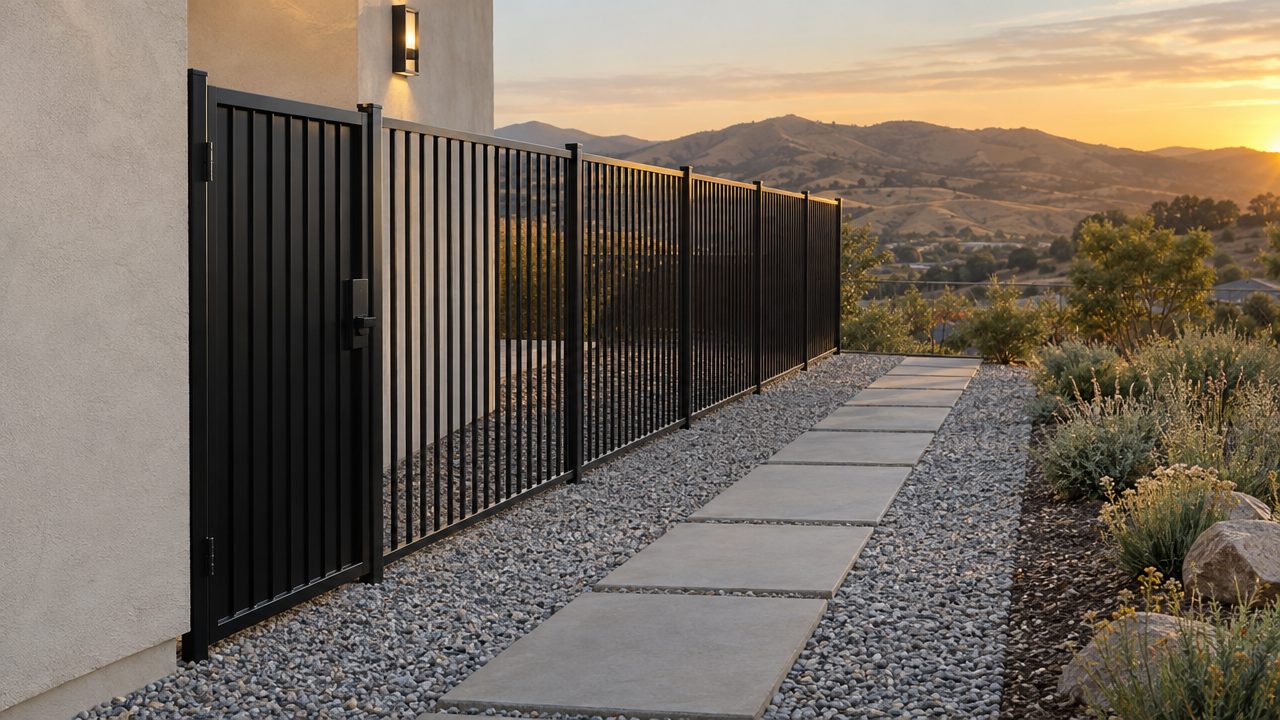
For a typical 10 foot, 6 foot tall section at the house end, 2026 ranges work out to about $450 to $850 for corrugated or corten steel and $1,200 to $1,800 or more for full-privacy aluminum. Open styles and every other material are in the best fire resistant fence comparison.
Does a privacy fence have to be noncombustible under Zone 0?
Only the part within 5 feet of the house. Under the state rule, a fence or gate attached to the house or within 1 foot of it needs a 5 foot noncombustible span at the house end, and no new combustible fence can go up within 5 feet (14 CCR 1298.04(b)(9)). That ban on new fences starts on the effective date, so a new vinyl or wood privacy fence built within 5 feet after that day is not allowed. Existing attached fences get 3 to 5 years (timing), and fences farther out are not covered. The full fence wording is on Zone 0 fence requirements.
There was no statewide January 1, 2026 deadline, whatever some fence sellers claim. Berkeley’s local rule did start that day, but only in two hill areas.
A solid noncombustible fence helps beyond 5 feet too. Solid perimeter fences of noncombustible materials, such as steel or concrete, are effective barriers against radiant heat from a fire front. NIST’s 2022 fence report cites an Australian study in which “noncombustible pre-painted and metallic-coated sheet steel fences provided significant protection against radiant heat.”
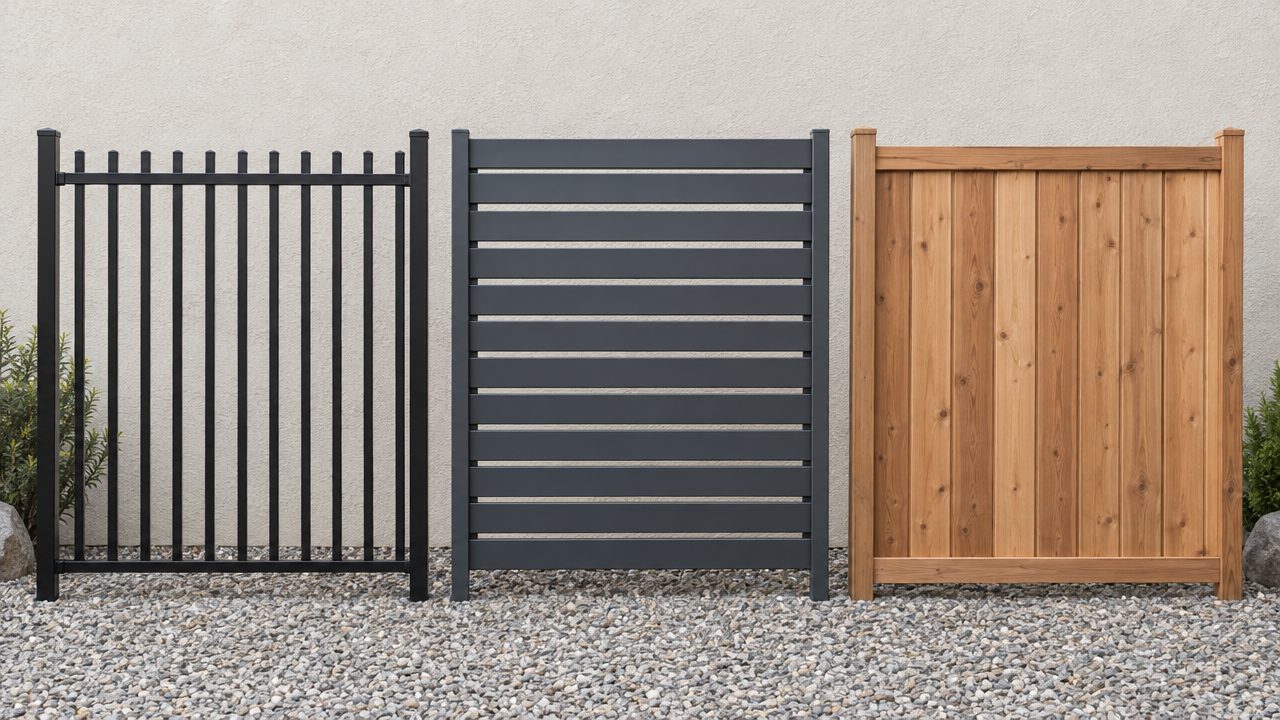
Which privacy fence materials are noncombustible?
| Material | Look | Installed cost | Watch for |
|---|---|---|---|
| Aluminum, horizontal slat or tongue and groove | Modern; colors and woodgrain | $75 to $110+ per ft semi-private, $120 to $180+ full privacy (Los Angeles planning range) | Foam-core or composite slats |
| Steel, solid or slat panels | Modern or industrial | $10 to $50 per ft, national | Galvanized or coated finish; frame material |
| Corten (weathering) steel | Rust-brown, rustic | $45 to $85 per ft | Rust runoff on paving |
| Corrugated steel | Rustic, ribbed | $45 to $65 per ft on a steel frame | Wood frames are common |
| Concrete block or masonry | Solid wall, stucco or block | $15 to $20 per sq ft | Footings, engineering, no gate |
| Fiber cement on metal framing | Board look | Get local quotes | Product E136 result; thin boards |
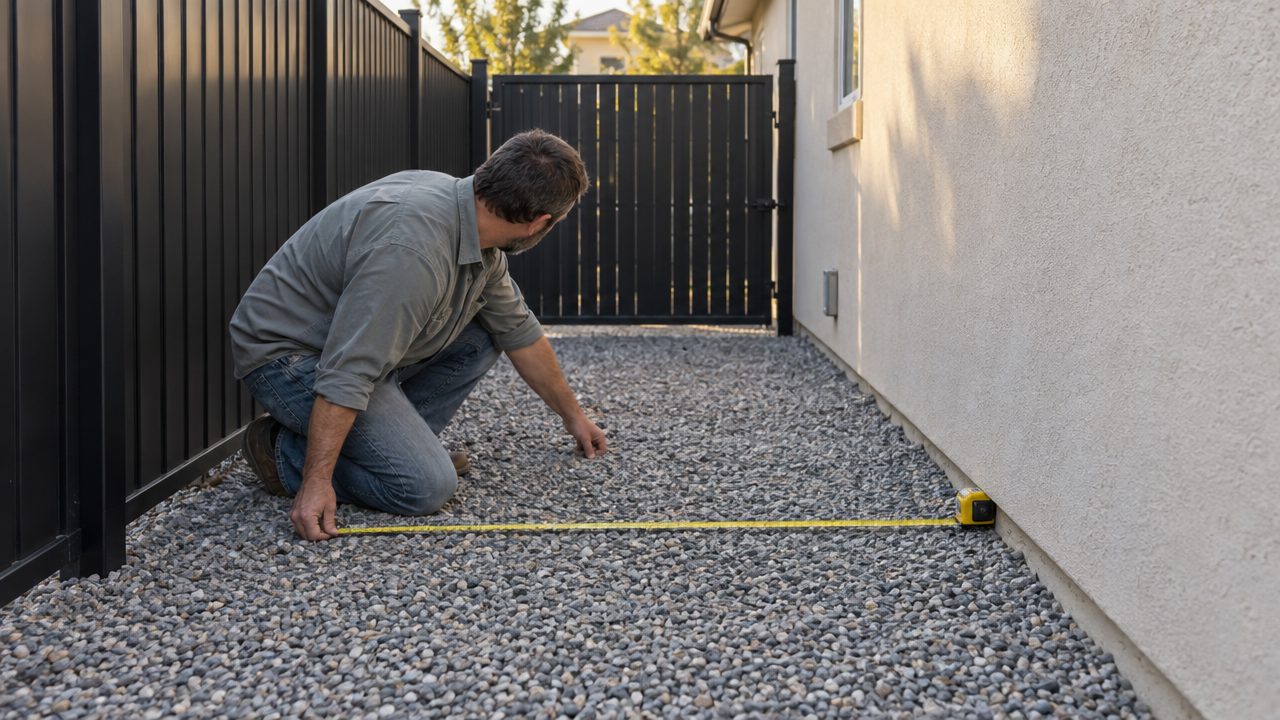
Applied to a 10 foot house-end section, 6 feet tall, those ranges give roughly:
- Full-privacy aluminum: $1,200 to $1,800+
- Corrugated steel on a steel frame: $450 to $650
- Corten: $450 to $850
- Block wall: $900 to $1,200 (60 sq ft at $15 to $20), before footings, finish and a gate
These are ranges multiplied out, not quotes. A section this short often hits a contractor’s minimum job charge, which can exceed the per-foot math (aluminum fence cost per foot).
Is a horizontal slat aluminum fence noncombustible?
The aluminum is, with one open question about melting covered on is aluminum noncombustible. The common alloys tested to ASTM E136 (the lab test the rule uses) in 2011 and 2020, 6063 among them, met the criteria. The color or woodgrain finish is a coating, which still counts if it is thin and has a low flame spread rating (coatings).
The thing to check is what the slats are made of. Some woodgrain privacy slats are aluminum coil wrapped around a polyurethane foam core. The coating exception covers a thin surface layer, not a foam core, so that slat needs its own E136 pass to count. Ask for a cross-section or spec sheet. Wood-look aluminum fence goes further into finishes and cores.
Are steel, corten and corrugated privacy fences noncombustible?
The steel itself is (is steel noncombustible). On these fences, check the frame and posts:
- Corrugated. Corrugated panels go up on treated wood frames ($30 to $45 per foot installed), cedar or redwood frames ($38 to $55) and steel frames ($45 to $65). Only the steel frame gives you an all-metal fence in the 5 feet at the house.
- Corten. Corten is weathering steel whose rust layer slows further corrosion. That patina is part of the steel, so there is no organic coating to check. For the first 1 to 3 years, corten sheds iron oxide with every rain, staining concrete, pavers and light siding, and in coastal or constantly wet conditions it can fail in as few as 10 to 15 years.
Is a block wall better than a metal privacy fence?
For fire, both work. Concrete, like steel, makes a solid noncombustible fence that blocks radiant heat, and the Wildfire Prepared Home standard some insurers use lists concrete, masonry and stone next to metal for the 5 feet at the home. Block runs $15 to $20 per square foot, about $90 to $120 per running foot for a 6 foot wall before footings and finish. A wall needs a separate metal gate, and a tall one may need a permit, so check with your city first.
Can fiber cement be used for a privacy fence in Zone 0?
Yes, with two checks. Fiber cement contains cellulose fibers, so ask the maker for the product’s E136 result. Within 5 feet of the house, the posts and rails holding the boards also need to be noncombustible, which in practice means metal. The boards are thin and need intermediate supports (fiber cement).
Do solid privacy fences need stronger posts for wind?
Yes. A solid panel takes the full wind load, and an open fence takes only part of it. Fence height times line post spacing sets the total force on a solid panel, and standard wind load tables assume a solid panel, with a reduction for open fabric. A full panel catches more wind, so posts, footings, wall anchors and bay widths have to be sized for it. Expect shorter bays or heavier posts on a full-privacy run than on a slatted one, and follow the maker’s spacing for your wind exposure.
Do I need a permit for a privacy fence?
Usually not for a building permit at standard heights. California Residential Code Section R105.2 exempts “Fences not over 7 feet (2134 mm) high” and retaining walls up to 4 feet measured from the bottom of the footing, unless they carry a surcharge. City zoning height limits are separate, and a fence can be subject to zoning rules even when it needs no building plan review. Check both with your city before ordering an 8 foot panel or a tall wall.
Why aren’t vinyl and composite privacy fences on this list?
Both are combustible. Vinyl fences will likely melt in fire conditions, and NIST put certain wood-plastic composite fences in its very high hazard group (is vinyl fence fire resistant). The Wildfire Prepared Home standard does not accept vinyl or composite within 5 feet of the home, posts and gates included. Beyond 5 feet, the state rule does not touch them, though a noncombustible fence still gives the radiant heat protection described above.
What should I check before ordering a privacy fence for the house end?
- What the slats or boards are made of. Ask for a cross-section or spec sheet. Solid or hollow metal is fine; a foam or composite core needs its own E136 result.
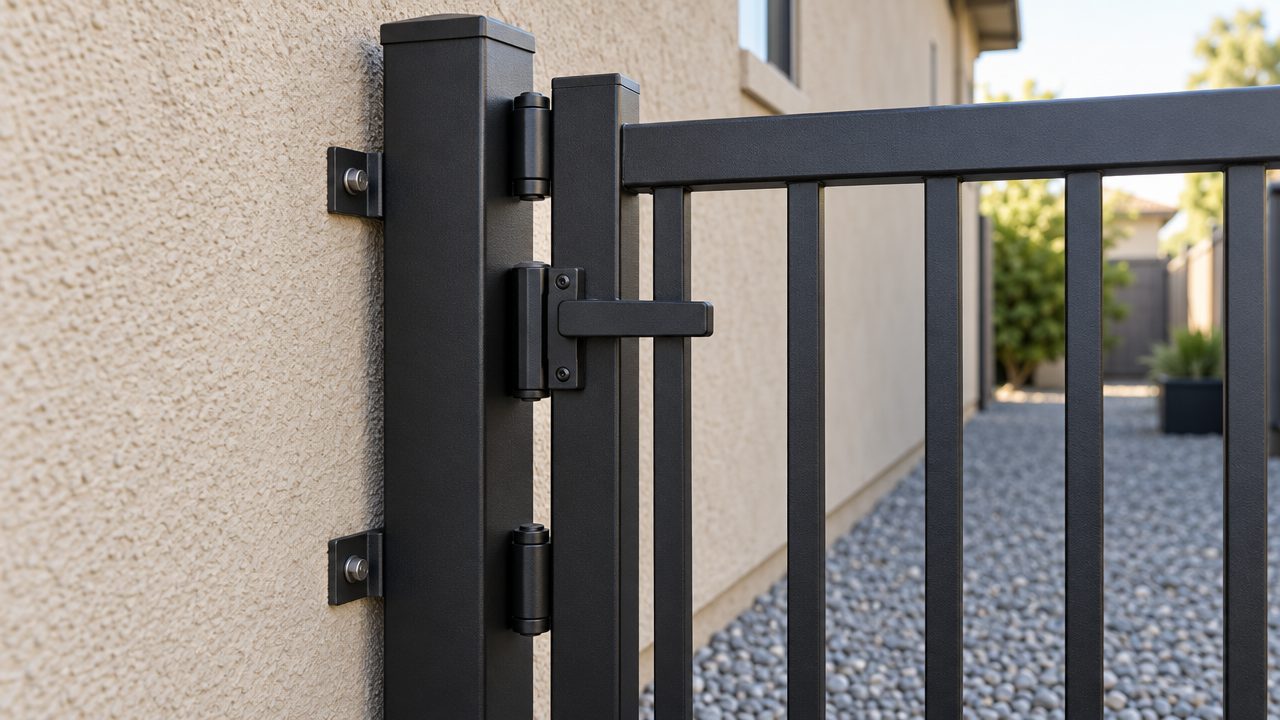
- The frame and posts. In the first 5 feet from the house, every post, rail and bracket should be metal or masonry.
- The finish. Ask for its ASTM E84 flame spread index (50 or less) and thickness (0.125 inch or thinner).
- Post spacing for a solid panel. Get the maker’s spacing for your wind exposure in writing, and check city height limits before ordering anything over 7 feet.
Questions people ask
Is aluminum or vinyl better for a privacy fence?
For fire, aluminum. Vinyl is combustible and will likely melt in fire conditions, while the common aluminum alloys tested to ASTM E136 all passed. In the 5 feet at the house, California's Zone 0 rule bars new combustible fences from the day it takes effect, which rules vinyl out there.
Are corrugated metal fence panels noncombustible?
The steel sheet is. Many corrugated fences hang that sheet on a treated wood or cedar frame instead of a steel one. Inside the 5 feet at the house, use a steel frame and steel posts so every part of the fence is noncombustible.
Keep reading


More in Product comparisons
Spot an error? Tell us and we will correct it and note the change.